

You can feel choppy writing when every sentence seems to stop just as the thought gets going. Related details arrive separately, leaving the reader to work out the connections. Sentence combining helps you bring those details together and make their relationship clear.
These sentence combining exercises for adults use everyday situations, workplace messages and short fiction scenes. You will practise joining ideas, then compare your versions with explained sample answers. Several answers can work. The useful question is what each version helps the reader understand.
Contents
Recognise choppy writing
Consider this small scene:
The café was busy. Lena found a table. The table was beside the window. She sat down.
Each sentence is grammatical, yet the repeated stops give fairly minor details equal prominence. Combining the middle details lets the scene move:
The café was busy, but Lena found a table beside the window and sat down.
The word but brings out a contrast between the busy café and Lena's success in finding a seat. The phrase beside the window attaches a detail directly to the table. You have also kept the order of events: finding a table comes before sitting down.
Choppiness depends partly on context. A brisk list of instructions may benefit from separate sentences. In a scene or explanation, connected ideas often read more smoothly together. Look at what the paragraph is doing before reaching for a longer sentence.

Choose how the ideas connect
First decide whether the ideas express a sequence, a reason or another relationship. The connecting word carries meaning: because claims a cause; although signals a concession. Adding either word requires enough evidence in the original to support that relationship.
An independent clause is a group of words that can stand as a complete sentence, such as The lift stopped. You can join two independent clauses with a comma and a suitable conjunction: The lift stopped, so we took the stairs. A semicolon also joins closely related independent clauses: The lift stopped; we took the stairs.
A comma alone produces a comma splice: The lift stopped, we took the stairs. In ordinary edited prose, give that join a conjunction or use appropriate sentence punctuation. When two actions share a subject, you can often keep the subject once: We took the stairs and reached reception.
Choose the relationship before the join
Match the connection to the meaning you already have.
Equal actions
Share the subject
Amir opened the file and checked the totals.
Both actions belong to Amir.
Contrast
Comma + but
The file opened, but the totals were missing.
Both sides can stand as sentences.
Reason
Because
Amir reopened the file because a total was missing.
Use this when the missing total caused the action.
Background detail
A phrase
Amir opened the file containing last month's totals.
Keep the detail beside the thing it describes.
Try 12 sentence-combining exercises for adults
Write your answers before reading the samples below. Keep every relevant fact, including who acts and when. You may change word order or remove repeated words. Aim for a readable sentence; exercise 12 invites you to keep two. Then try a second version with a different emphasis.
Everyday situations
Shared actions. Ben rinsed the cups. Ben stacked the cups on the drying rack.
Contrast. The café was crowded. A table was still available beside the window.
Cause. Priya's bus was delayed. The delay made her late for work.
Sequence. The meeting ended. Mara sent her notes to the team afterwards.
Workplace messages
Identifying detail. Our colleague designed the poster. Our colleague is called Nia.
Describing an object. The order arrived this morning. Its box was damaged.
Concession. The backup failed. The files remained secure in a second copy.
Condition. You can use the meeting room. You must reserve it first.
Short fiction scenes
Timing. Owen reached the station. The train had already left.
Simultaneous actions. Jo lifted the latch. At the same time, she kept her torch pointed at the stairs.
Two observations. A key was in the lock. Light showed beneath the door. Keep the relationship neutral.
A final discovery. Rafi checked the figures. He emailed the report. The report contained an error. He spotted the error after sending it. Combine into two sentences, giving the discovery emphasis.
If you would like guided practice beyond these examples, WriteCraft Pro includes lessons on grammar and clarity, with personalised feedback on submitted exercises. You can use that feedback to explore how your sentence choices affect the reader.
Compare the sample answers
Check your answer's meaning before comparing its wording. A different version can be equally effective. The alternatives here show how emphasis or sentence structure can change while the facts stay intact.
For each answer, ask whether you have kept the original's important detail. A smooth sentence can still be inaccurate: The order arrived late in a damaged box adds lateness to exercise 6. Check pronouns too. If it could refer to two different things, name the object again. Finally, read the join aloud. An awkward pause may reveal that you have crowded several ideas into a single sentence. Try another construction and compare the effect.
Ben rinsed the cups and stacked them on the drying rack. Keeping Ben as the shared subject removes a repeated name. After rinsing the cups, Ben stacked them on the drying rack makes the sequence explicit. The opening phrase describes Ben's action, so Ben follows it as the subject.
The café was crowded, but a table was still available beside the window. The conjunction makes the contrast easy to follow. Although the café was crowded, a table was still available beside the window treats the crowded room as background to the available seat.
Priya was late for work because her bus was delayed. This preserves the stated cause. Priya's bus was delayed, so she was late for work presents the cause first and its result second. Choose the version that fits what your reader needs to hear first.
After the meeting ended, Mara sent her notes to the team. The opening clause establishes the timing; the comma marks its boundary. Mara sent her notes to the team after the meeting ended leads with Mara's action. Both retain the recipient and the sequence.
Our colleague Nia designed the poster. The name sits beside the person it identifies. Nia, our colleague, designed the poster gives the relationship as additional information. The commas belong around that inserted phrase; their use depends on how the person is introduced.
The order arrived this morning in a damaged box. The phrase adds the condition of the box without inventing a cause. The order, whose box was damaged, arrived this morning also works, though it sounds more formal. Neither version says who damaged the box.
Although the backup failed, the files remained secure in a second copy. The concession highlights the reassuring outcome. The backup failed, but the files remained secure in a second copy gives the failure and the outcome similar weight. Retain the second copy: it explains where the files were secure.
You can use the meeting room if you reserve it first. The condition keeps advance reservation compulsory. Provided you reserve it first, you can use the meeting room places the requirement up front. Removing first would lose the timing requirement.
When Owen reached the station, the train had already left. The past perfect, had left, keeps the departure earlier than Owen's arrival. The train had already left by the time Owen reached the station puts the missed train first. Both preserve the chronology.
Jo lifted the latch while keeping her torch pointed at the stairs. The phrase keeps Jo responsible for both simultaneous actions. As Jo lifted the latch, she kept her torch pointed at the stairs states the same overlap with two clauses. Neither adds a reason for her behaviour.
A key was in the lock, and light showed beneath the door. The conjunction connects the observations without claiming that one caused the other. A key was in the lock; light showed beneath the door gives a firmer pause. Both leave the reader free to interpret the scene.
After checking the figures, Rafi emailed the report. Only then did he spot an error in it. The second sentence gives the discovery its own space. Rafi checked the figures before emailing the report; he spotted an error in it afterwards preserves the facts in one sentence, with less separation around the discovery.
Keep effective short sentences
A short sentence can give a discovery or instruction extra force. Combining everything into one long sentence can bury the detail that deserves attention. Listen to the pace of the whole passage.
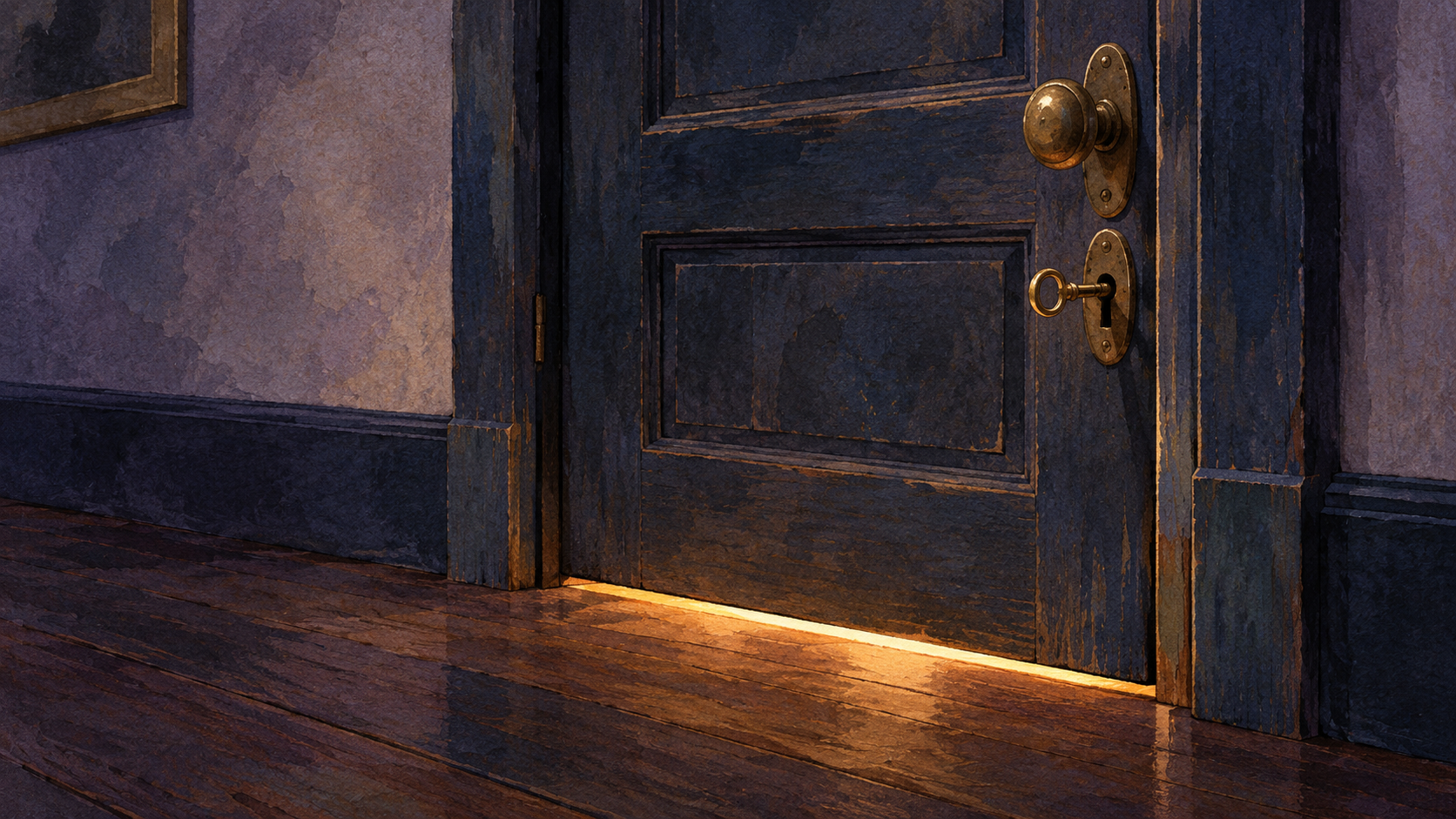
Compare these original scene endings:
Mina tried the handle, leaned closer to the glass and called her brother's name. No answer.
The final fragment creates a deliberate pause in fiction. It can work in that context even though it lacks a complete clause. A workplace instruction will often benefit from a complete short sentence: Save your changes before closing the file. Keep a separate backup.
During revision, keep a short sentence when its separate space helps the reader notice something. Combine nearby details when their connection would otherwise remain unclear.
Practise in your own writing
Choose a paragraph you have written and underline two adjacent sentences about the same situation. Make one combined version, then read both aloud. Check whether the new join preserves the facts and whether an important detail has lost emphasis. Keep the version that serves the paragraph.
Sentence combining becomes useful when you can explain your choices. WriteCraft Pro offers further grammar and clarity exercises, with constructive feedback to help you review those choices in your own writing. This short introduction shows how the course works.