A character is searching for a key. You have imagined the room beautifully: the faded armchair, the scarf in the drawer, the rug that never lies flat. On the page, however, the search waits while you give the reader a tour.
To weave description into action, choose details the character encounters while pursuing an immediate goal. Let a sticking drawer resist her hand; let a loose rug catch her foot. Keep enough spatial information for the reader to follow her, and decide where you want the scene to linger. The following original examples show how those choices work.
Start with the room and the immediate goal
Here is a static description of a sitting room, followed by the action it is meant to support:
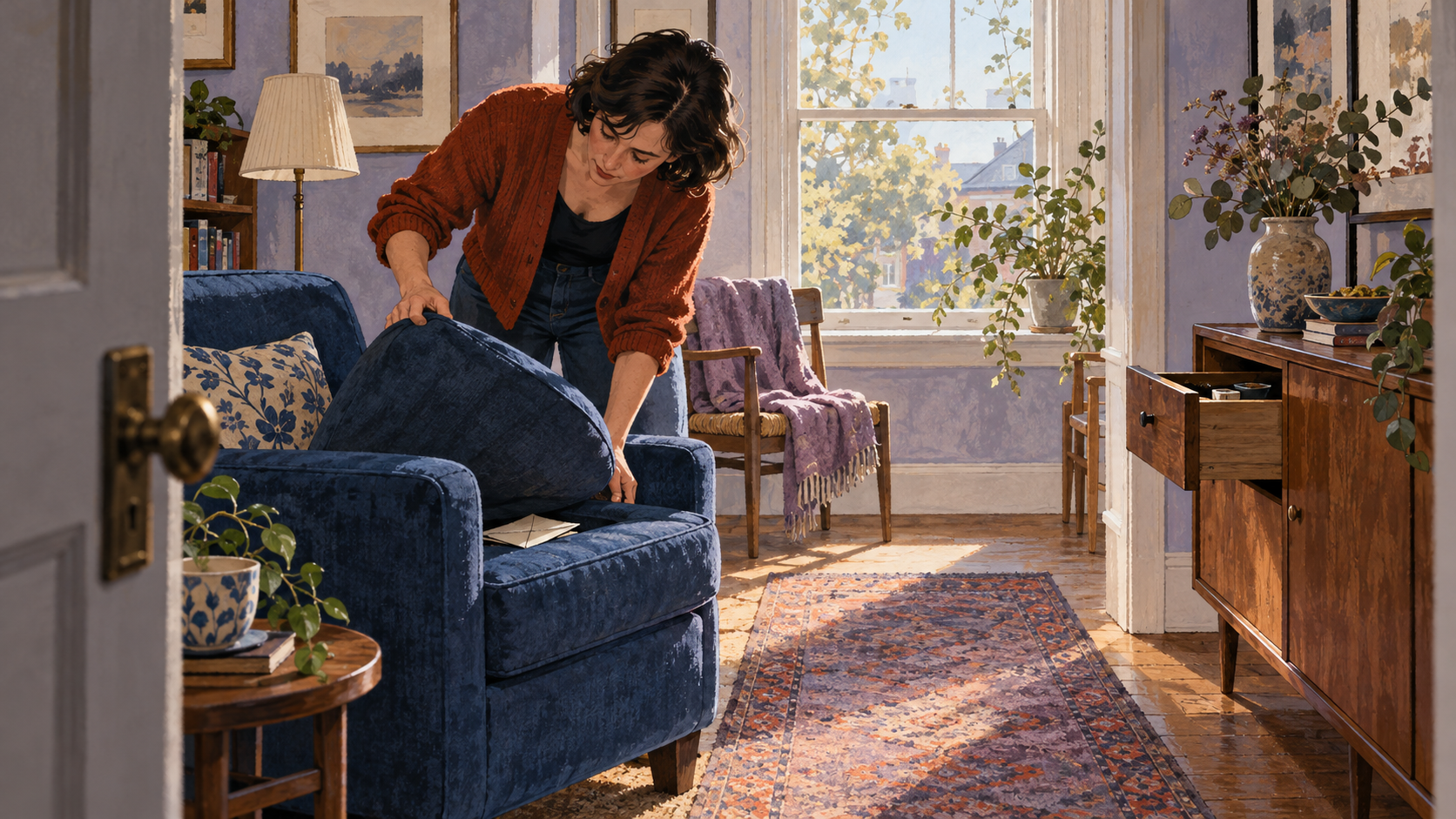
The sitting room had a blue armchair to the left of the door and a wooden sideboard against the opposite wall. A narrow rug lay between them, its corner curled upwards. Afternoon light fell through the window onto a brass bowl on the sideboard. The chair's velvet was worn pale along the arms. In the sideboard's shallow top drawer were cream envelopes and a lavender scarf. The drawer often stuck.
Lena needed to find the front-door key before her brother arrived to collect her.
The room is easy to picture. Its layout is useful, and several objects offer possibilities for the search. The paragraph also gives the drawer's contents before Lena opens it. In a scene closely following her experience, that information may arrive more naturally when she reaches inside.
First, identify the scene's organising question: where is the key? Lena's attention will favour likely hiding places. The chair and drawer are promising; the window can establish light without receiving a separate inspection. You can keep other details in your working notes until the story offers a reason to use them.
Watch what happens when every detail gets a movement
Adding verbs to the inventory creates a second problem:
Lena rushed through the door, swerved past the blue armchair, scraped its pale velvet, kicked the curled rug, blinked at the window, grabbed the brass bowl, shook the cream envelopes, flung the lavender scarf and yanked the sticking drawer. Her brother would be here soon. She spun back to the chair and dived beneath it.
There is plenty of activity, but the search has become hard to follow. Lena handles the drawer's contents before pulling the drawer open. Her route doubles back without a clear discovery. The sequence gives the window, bowl and scarf almost equal weight, so the reader must track movements that offer little guidance about her thinking.
A rapid verb does not automatically produce a rapid reading experience. Here the reader has to untangle the choreography. Give Lena a plausible next move, and group each movement with the detail it reveals. A quieter sentence can make the action clearer.
Build a balanced search through the same room
This revision keeps Lena's goal in view and lets the room emerge in stages:
Lena lifted the blue armchair's cushion. A folded receipt lay underneath, but no key. She ran a hand along the pale, worn velvet where the seat met the arm, then looked across at the sideboard. Her brother would knock any minute.
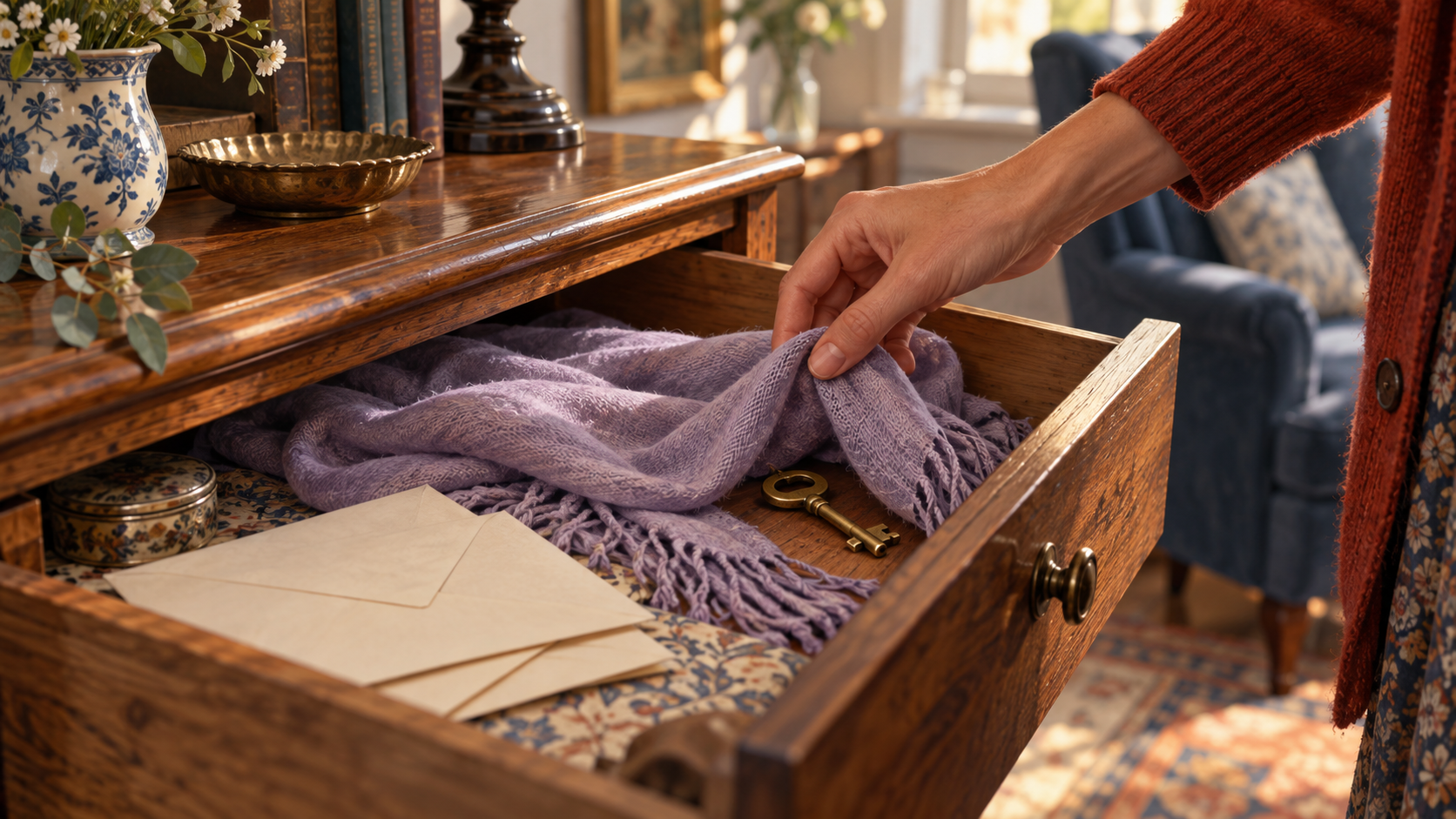
The rug's curled corner caught her shoe as she crossed the room. She pushed it flat and pulled the shallow top drawer. It stuck halfway. Holding the sideboard steady, she tugged again; the cream envelopes slid forward. She lifted the lavender scarf. A brass key lay beneath it, its teeth pressed into the soft wool.
A knock came at the front door. Lena closed her fingers around the key.
The chair appears first because Lena searches it first. Its colour locates it; the worn velvet becomes something her hand follows. The sideboard is placed across the room before she moves towards it. The rug interrupts that crossing, and the drawer supplies a small resistance before the discovery.
Several details now share a sentence with an action. The scarf's texture also lingers briefly at the moment of finding the key. That tiny pause gives the discovery a physical presence. You can choose such moments deliberately, even in a scene with an urgent goal.
Choose what the character notices, and when
Try a simple revision pass: underline the actions, then circle the setting details. Look for places where they can meet. A cupboard's chipped paint may appear when a sleeve catches on it. A cramped passage may become clear when two people try to pass. The detail enters through contact, resistance or a decision.
Viewpoint helps you select the wording. Someone who knows this room well might head straight for the unreliable drawer. A visitor might pause to work out which piece of furniture holds spare keys. Familiarity changes what needs explaining. For broader observation practice, try these descriptive writing exercises with worked examples.
Keep one or two stable landmarks. In our example, the chair stands beside the entrance and the sideboard is opposite. Once established, those positions support the movement without repeated directions. Read the passage as a continuous route: could you sketch where Lena goes?
If you would like to practise selecting details and shaping scenes through guided exercises, WriteCraft Pro includes lessons on description and creative writing with personalised feedback.
A detail's route into the scene
Use this map to plan the order of a few details. It shows three moments from Lena's search, with the information each moment carries.
The room appears as Lena searches
01 · Search the chair
Lift the cushion. Follow the worn velvet.
Reader learns: where Lena begins and what her hand encounters.
02 · Cross to the sideboard
Catch a shoe on the curled rug. Pull the sticking drawer.
Reader learns: the room's layout and its small obstacles.
03 · Lift the scarf
Find the key pressed into the wool.
Reader learns: the hiding place, with a brief tactile pause.
Choose the details and tempo that suit your scene. A quiet observation can deserve space of its own.
Leave room for a deliberate descriptive pause
A longer description can establish atmosphere, invite reflection or give a place emotional weight. A character returning to an empty childhood home may have good reason to stand still. You decide how much time the narration spends there.
During revision, ask what you want the reader to experience at this point. Suspense may call for a selective search. Grief may call for a sustained look at an untouched room. Every detail can contribute to mood, voice or meaning; it need not move the plot forward. The technique above gives you control over where description enters.
Practise with a small search
Rewrite this inventory as a short scene in which Amir searches for a missing train ticket:
The kitchen had a sticky table, a chair with a coat over its back and a windowsill crowded with pots of basil. A shopping bag stood on the table.
Choose two details to reveal through contact. Establish where Amir searches first, then show what changes his next move. Aim for 60–90 words. Here is one possible answer:
Amir peeled the shopping bag off the sticky kitchen table and checked beneath it. No ticket. Beside the table, his coat hung over a chair. He searched one pocket, then the other. A folded rectangle caught against the lining. As he opened it, he glanced towards the crowded windowsill, where the basil pots hid the clock. He shifted a pot with his elbow. Six minutes to get out of the house.
The bag reveals the table's surface. The chair fixes the coat's position. The basil enters when Amir needs to see the time, so the final observation grows from his concern. Check whether your version preserves a similarly clear route.
Return to a scene in your own draft and choose one detail to reveal through a character's interaction. Try a second version with a deliberate pause, then compare the effect. WriteCraft Pro offers further practice in description and scene writing to help you develop these choices.