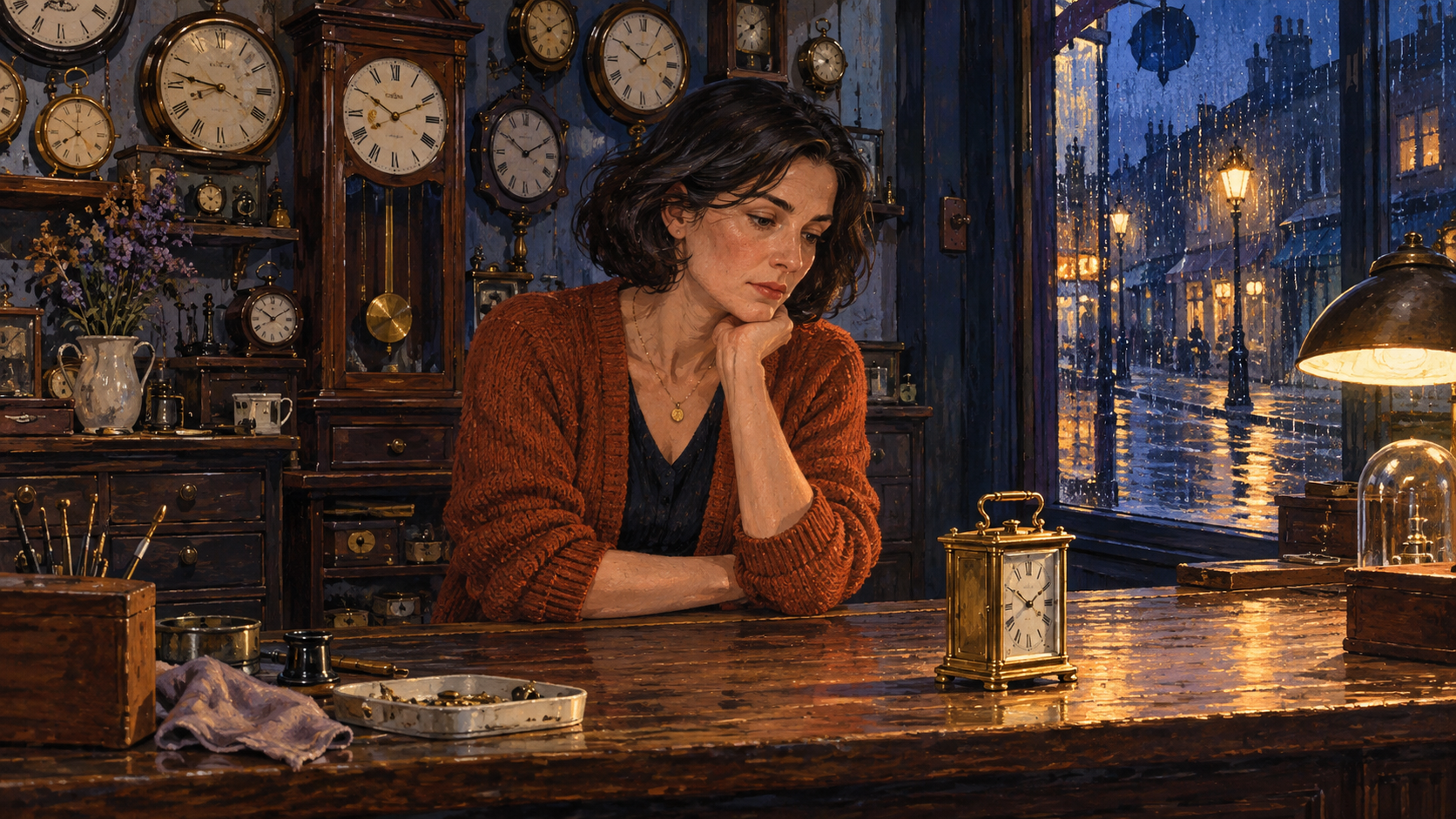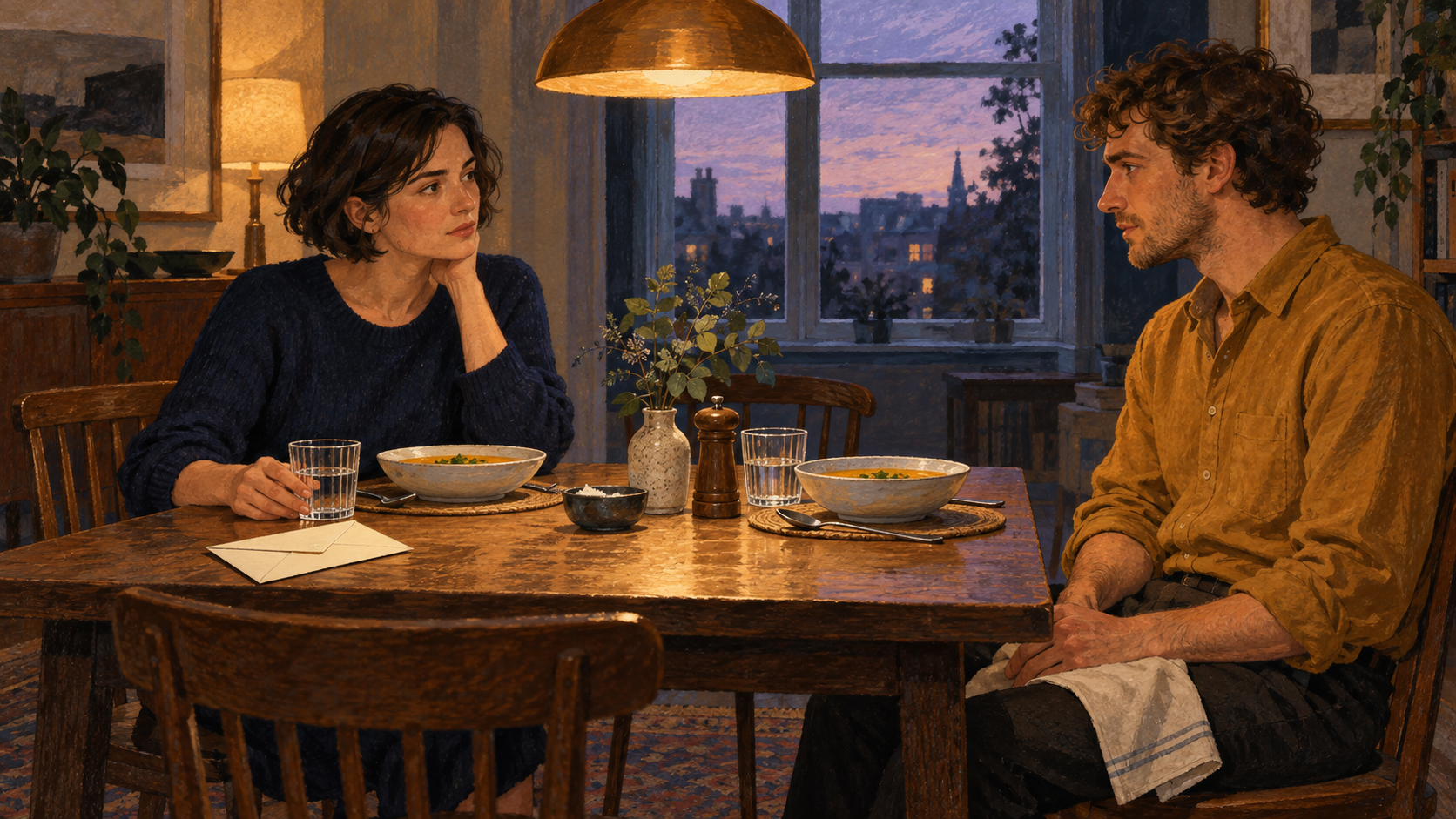
Mara is worried about her announcement. Across the dinner table, Ivo is worried about his. A writer knows both secrets, so slipping both into a paragraph feels wonderfully efficient. The reader, who has just settled into Mara’s perspective, suddenly has to change seats.
To avoid head-hopping in third person, choose whose experience guides the scene and keep private information within that character’s reach. Other people remain available through speech, behaviour and the viewpoint character’s interpretation. This guide focuses on third-person limited narration, with one original dinner scene repaired from each sibling’s perspective.
Contents
Decide what the viewpoint character can know
Third-person limited uses names and pronouns such as she, he or they while restricting access to one character’s experience at a time. The narration can give that person’s thoughts, memories and sensations. It can also report what they hear, see or already know.
A viewpoint character can judge another person, including judging them wrongly. “Ivo looked annoyed” presents an impression. “Ivo regretted coming” declares his private response. In a scene anchored to Mara, that second claim needs a route: perhaps he says it, or she remembers him admitting it earlier.
The difference extends beyond obvious thought verbs. “He concealed his disappointment” supplies a feeling and an intention. “He folded the napkin until its corners met” supplies behaviour. Mara might read that behaviour as disappointment; the reader can weigh her reading against the evidence.
Choosing a viewpoint also shapes which details receive attention. A hungry guest might notice the soup cooling; someone planning to leave might watch the clock. Our descriptive writing exercises explore how attention changes a scene.
Find the slips in a dinner scene
This original teaching passage begins with Mara’s private anxiety, then repeatedly gives Ivo’s unspoken knowledge. Read it once for the situation, then look for places where access changes.
Mara set the soup on the table and sat opposite her brother. The envelope beside her plate seemed brighter than everything else in the room. She had rehearsed the announcement all afternoon, but now the words felt absurdly grand for a Tuesday dinner.
Ivo watched her straighten the spoon. He hoped she would ask about his day. He had lost his job that morning and could still hear the manager apologising, as though an apology might pay the rent.
“You’re quiet,” Mara said.
“Long day.”
She took that as permission to wait. Perhaps he would feel better after eating. She pushed the bread towards him and kept her hand beside the water glass.
Ivo tore a piece from the loaf. He was certain the envelope contained another invitation to a wedding he could scarcely afford. He wanted to tell her everything before she asked him to buy a suit.
“I’ve got some news,” she said.
He looked up. Mara regretted starting. She could already imagine him calling their mother.
“So have I,” he said, and folded his napkin into a small square.
She decided to let him speak first. He wished she would stop looking at him with such patient concern.
The access moves from Mara’s rehearsal to Ivo’s hope, job loss and memory, returns to Mara’s reasoning, then enters Ivo’s certainty and wishes. The dialogue and visible actions remain usable in either viewpoint. The private explanations are the parts that need sorting.
Rewrite the scene through Mara
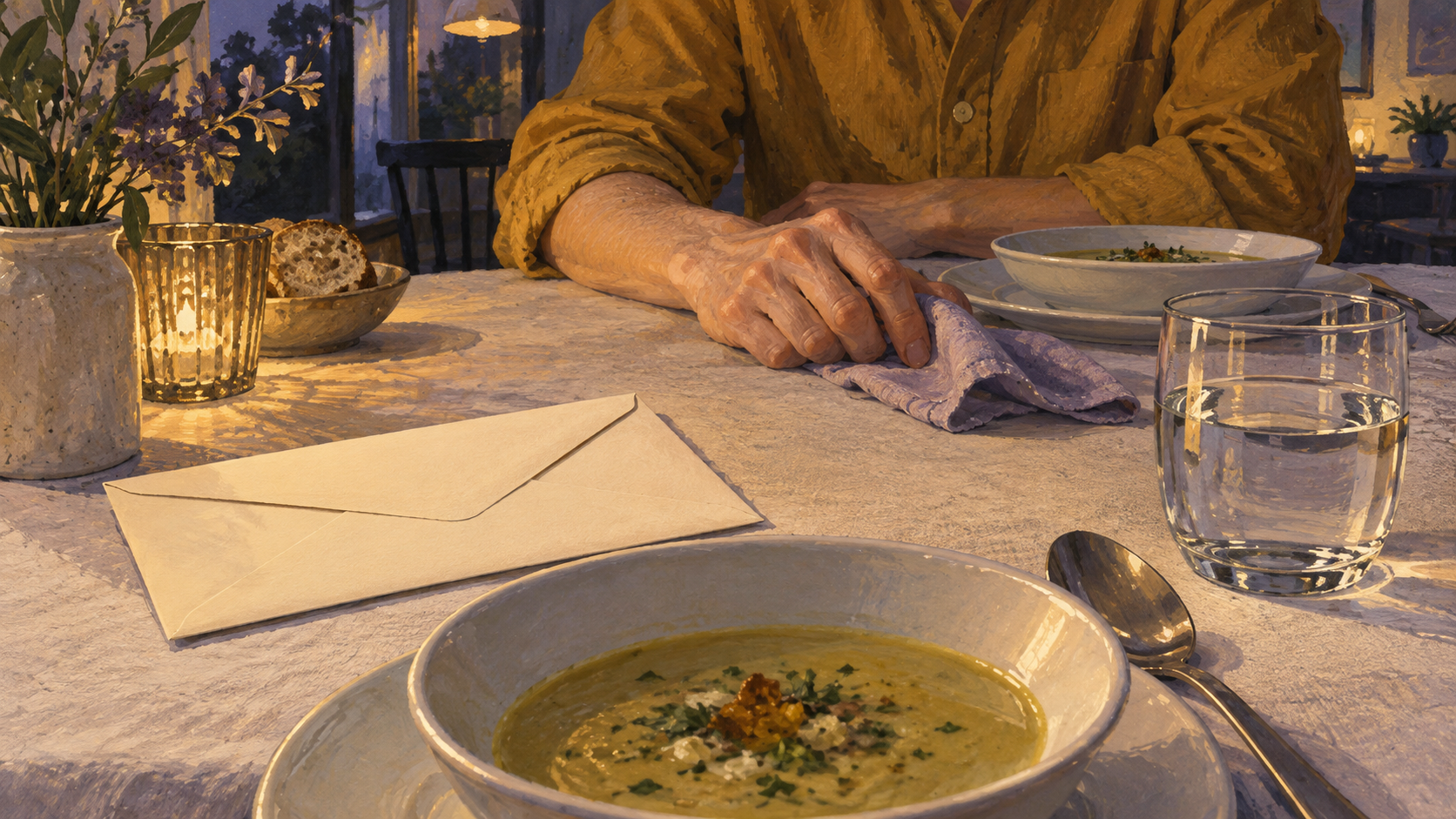
Keep Mara’s announcement as the immediate pressure. Give her evidence of Ivo’s discomfort while allowing its cause to remain unknown.
Mara set the soup on the table and sat opposite her brother. The envelope beside her plate seemed brighter than everything else in the room. She had rehearsed the announcement all afternoon, but now the words felt absurdly grand for a Tuesday dinner.
Ivo watched her straighten the spoon. Usually he arrived with a complaint about the office. Tonight he had barely taken off his coat before sitting down.
“You’re quiet,” Mara said.
“Long day.”
She took that as permission to wait. Perhaps he would feel better after eating. She pushed the bread towards him and kept her hand beside the water glass.
He tore a piece from the loaf, leaving it untouched on his plate. His gaze settled on the envelope.
“I’ve got some news,” she said.
He looked up. Mara regretted starting. She could already imagine him calling their mother. Moving away would become a family discussion before she had finished explaining why.
“So have I,” he said, and folded his napkin into a small square.
She decided to let him speak first. “Go on.”
He pressed a thumbnail along the folded edge. She waited, wondering whether she should move the envelope out of sight.
What changed: Ivo’s job loss becomes a gap in Mara’s understanding. His silence and untouched bread give her something to notice. “Perhaps” and “wondering” locate the uncertainty in her. The added reference to moving away reveals her own news, which she can know.
Keeping one perspective preserves a useful imbalance: the reader shares Mara’s uncertainty about Ivo while knowing why she is hesitating. You can let his next line disclose the job loss and change her interpretation of the whole dinner.
Rewrite the scene through Ivo
Now give the scene to Ivo. Keep the same exchange and envelope, but select details through his anxiety about money.
Ivo watched Mara set the soup on the table. She sat opposite him and straightened her spoon beside a cream envelope. He hoped she would ask about his day. He had lost his job that morning and could still hear the manager apologising, as though an apology might pay the rent.
“You’re quiet,” she said.
“Long day.”
The words came out too easily. They were the same words he used whenever the office printer broke. Mara pushed the bread towards him. He tore a piece from the loaf and left it on his plate.
The envelope looked expensive. Another wedding invitation, probably. He could scarcely afford the last one. He wanted to tell her everything before she asked him to buy a suit.
“I’ve got some news,” she said.
He looked up. Her hand rested beside the water glass. She had hardly touched her soup either.
“So have I,” he said, and folded his napkin into a small square.
“Go on.”
Her patience made the first sentence harder. He pressed a thumbnail along the folded edge. Once he said it aloud, he would have to hear someone else’s answer.
What changed: Mara’s rehearsal and planned move disappear. Ivo sees an envelope and makes a guess. “Probably” marks the wedding invitation as his interpretation, so the narration leaves room for him to be mistaken. His familiar excuse and the folded napkin now carry his own discomfort.
The siblings still speak the same words, yet the scene asks a different question. Mara’s version makes us wait for Ivo’s explanation. Ivo’s version makes us wait for his admission. Choose the version that best serves the next development in your story.
For practice with the decisions a scene reveals, see our guide to developing a short-story character through choices. You can also explore scene writing through WriteCraft Pro’s optional exercises and personalised constructive feedback.
Map the information at the table
Use this diagram to separate shared evidence from private knowledge. Each version can draw on the middle band, then add the experience belonging to its chosen character.
One dinner. Two limits of knowledge.
Shared evidence at the table
The envelope · untouched bread · “Long day” · a folded napkin
Inside Mara’s version
Known: she plans to move away.
Interpreted: Ivo seems troubled.
Still hidden: he has lost his job.
Inside Ivo’s version
Known: he has lost his job.
Interpreted: the envelope may be an invitation.
Still hidden: Mara plans to move away.
Your revision question: how did the chosen character obtain this information?
Handle deliberate viewpoint changes
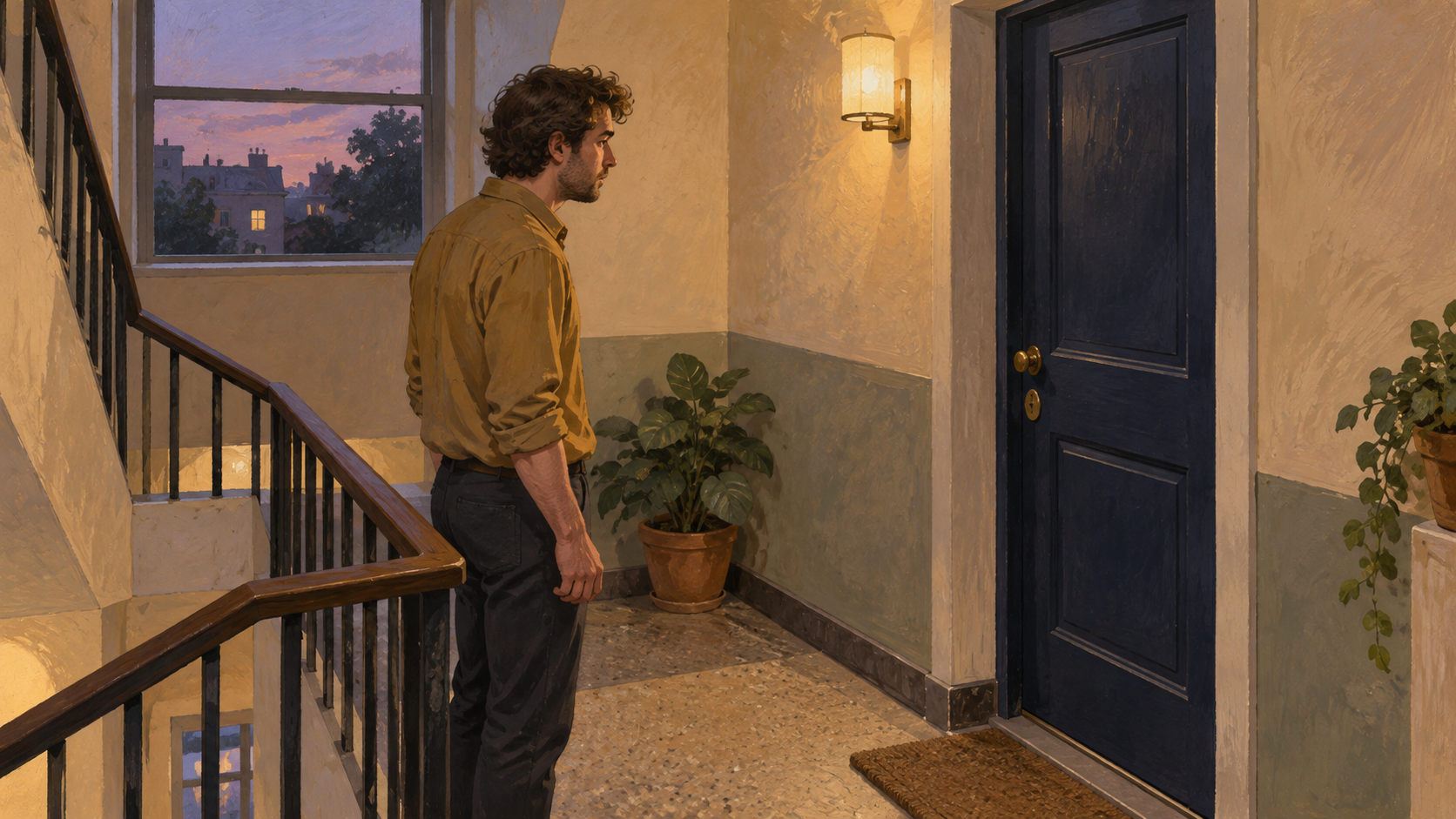
A story can use several limited viewpoints. A chapter or scene break gives a clear place to change, followed by an opening that establishes the new character’s situation and attention. For example: “After dinner, Ivo stood outside the flat, rehearsing what to tell his landlord.” The reader has a fresh location and an unmistakable anchor.
Authors can signal transitions in other ways too. A scene break is a practical starting technique, and the larger aim is to make changes legible within the narrative approach you establish.
Omniscient narration gives the narrator broader access. It can reveal both siblings’ secrets in the same scene. A consistent narrating voice might say: “Each had brought an announcement to dinner; each mistook the other’s silence for an invitation to postpone it.” Here the narrator deliberately surveys the pair.
The problem in our first passage arises from its shifting access after an intimate opening in Mara’s experience. If you want a narrator who moves among minds, establish that scope and guide the reader through it. Perspective changes can be intentional, and different stories can sustain different arrangements.
Try a spot-the-slip exercise
The following passage belongs to Mara. Which sentence supplies private information she has no stated way to know?
Ivo pushed his bowl away. Mara wondered whether the soup was too salty. He feared she would laugh at his redundancy. “Is it all right?” she asked.
Answer: “He feared she would laugh at his redundancy” enters Ivo’s private thoughts. Keep the action and Mara’s question, then replace the slip with evidence she could observe: “He opened his mouth, then picked up the water glass.” His hesitation remains available for interpretation.
Try an alternative that lets Ivo reveal the information in speech: “I’ve lost my job,” he said. “Please take this seriously.” That changes the timing of the disclosure. Choose whether the scene benefits from uncertainty or an immediate admission.
Check your own scene
Write the viewpoint character’s name at the top of a scene. Underline private thoughts, intentions and sensations. Beside each piece of information about another person, identify its route: observed, spoken, remembered or inferred. Revise any unsupported access.
Read again for voice and emphasis. The details should reflect what this person would notice under this particular pressure. Keep enough uncertainty for the reader to discover something alongside them. That dinner envelope can stay closed until someone chooses to open it.
Rewriting a scene through a second character is a useful way to test your choices. WriteCraft Pro includes creative writing and revision practice, with optional exercises and personalised feedback. The course introduction below shows how you can keep developing a passage after its first draft.
Explore the course if you would like structured practice to help you choose a viewpoint and sustain it through a complete scene.