A ten-minute writing session can leave you with a choice to explore, a voice to develop or a paragraph worth revising. These 10 minute creative writing exercises give each session a specific job, followed by a worked response so you can examine how a small piece of writing takes shape.
Choose one exercise for today. The suggested timings include planning, drafting and a brief review; adjust them to fit your pace. You can dictate, type or write by hand. There is no prize for reaching the last full stop before the timer. All the situations and sample responses below are original fictional teaching examples.
Use your ten minutes
Read the task before starting. Keep the sample response covered until you have tried your version: its details can otherwise elbow their way into your scene. A few unfinished sentences are enough material for the review. If an idea needs longer, leave yourself a note and return to it.
Each exercise has one main focus. During a voice exercise, listen to the speakers; during revision, choose the effect you want to change. Trying to improve every aspect of a story in the same sitting makes it harder to judge what your edits achieve. Keep any questions that fall outside today's task in a separate note.
1. Give a character a decision
Timing: two minutes to choose the situation, six to draft, two to review. Write a short scene in which someone can solve an immediate problem only by risking something they value. Finish just after they act. You can leave the long-term outcome open.
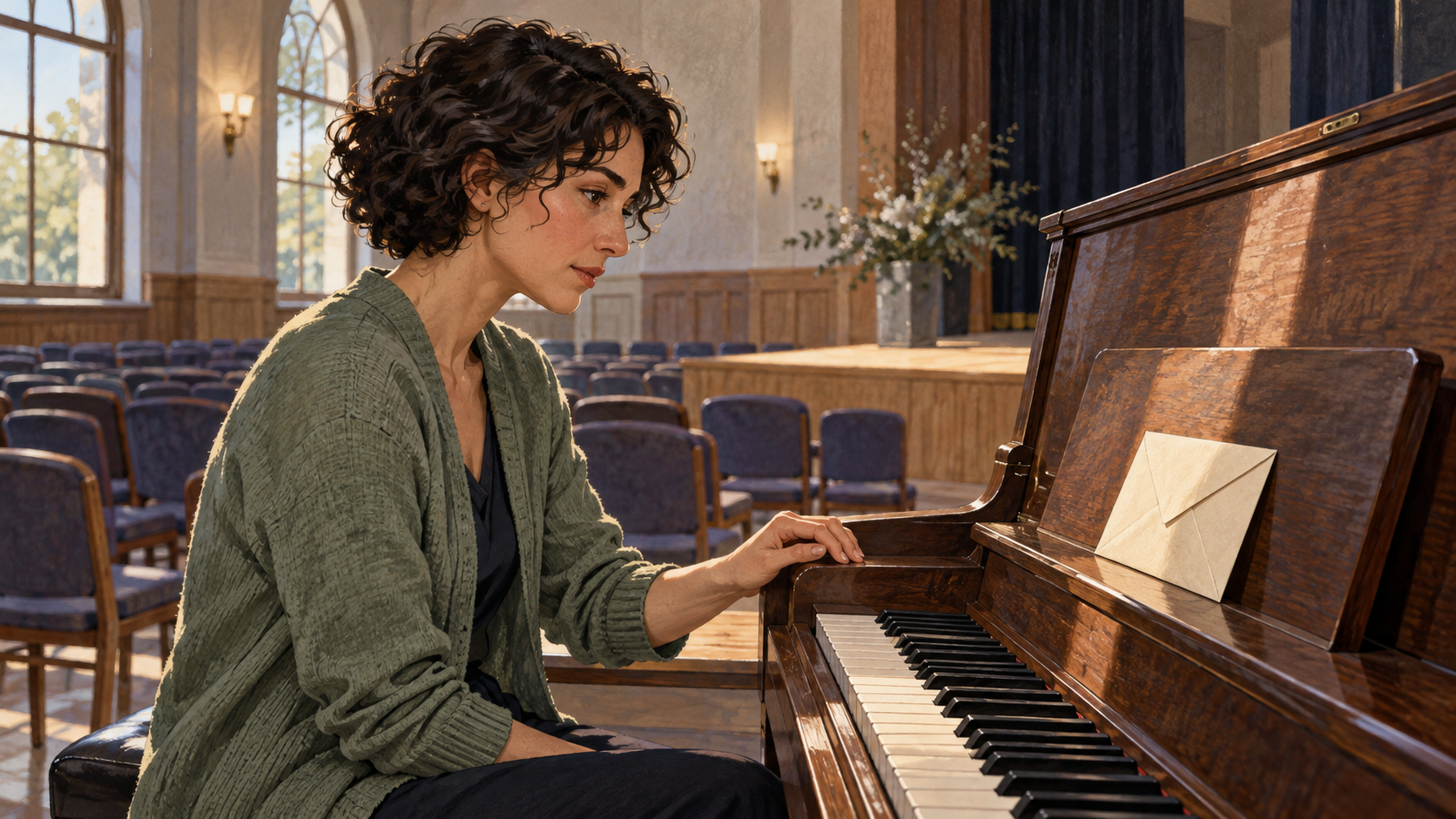
Prompt: a volunteer clearing a community hall finds an envelope of money beneath a chair. The hall treasurer has already left. Give the volunteer a reason to hesitate before reporting it. Decide what they do with the envelope in the final sentence.
Sample response
Nell counted the notes twice. Enough to pay the deposit on the van. From the kitchen came the scrape of a pan: her brother had stayed to help, though he had promised his landlord the rent tonight.
She turned the envelope over. Nothing on the back. The treasurer's number was taped beside the telephone, under the instruction to switch off the lights.
Her brother appeared with a tea towel over his shoulder. 'All done?'
Nell put the envelope beside the telephone and reached for the receiver.
A useful choice: the van deposit and overdue rent give the money personal significance. Nell's final action puts the scene's dilemma into motion. The passage leaves room for competing interpretations: she may be calling the treasurer out of principle, fear or a wish to remove temptation before speaking to her brother.
Review your version: underline the action that commits the character. Can you identify a cost attached to it? If the ending merely says they were unsure what to do, add a physical step with consequences. Try placing the envelope in a bag, handing it to another person or making the call. Each choice opens a different next scene.
2. Let two voices disagree
Timing: two minutes to decide what each person wants, five to write six to ten lines of dialogue, three to review. Give two speakers different ways of approaching the same practical problem. One wants to keep an old café sign; the other wants permission to replace it.
Choose a relationship before you begin. An owner speaking to a business partner has different room to manoeuvre from an employee speaking to a new manager. Keep the disagreement small enough to fit in a single exchange, and let the wording suggest how each speaker sees the situation.
Sample response
'We could repair the corner,' said Dev.
'The corner is in a carrier bag,' said Sal.
'It's the original sign.'
'I know. I sweep pieces of it up every Tuesday.'
Dev set the bag carefully on the counter. 'My mother painted those letters.'
Sal put down the catalogue. 'Then let's hang it inside. Somewhere the weather can't finish the job.'
A useful choice: Dev begins with preservation; Sal answers with practical evidence. His careful handling of the bag supports the personal explanation when it arrives. Sal's last line changes her proposal in response to that explanation, so the conversation develops instead of circling the same objection.
Review your version: remove the names temporarily and read the lines aloud. Look for differences in word choice, sentence length or priorities. You can restore names and dialogue tags afterwards. Resist giving one speaker a collection of eccentric verbal habits: a clear desire can make a voice recognisable without a catchphrase attached to every line.

3. Turn an observation into a possibility
Timing: three minutes to observe, four to invent, three to review. Choose an ordinary object nearby or use the lost-property image above. Write down five things you can actually see. Then select one and invent a short incident that changes its significance.
Keep your observation notes and imagined incident visibly separate. A scuffed boot is observable; a boot abandoned after an argument is an interpretation. This distinction gives you freedom to invent while keeping track of which details you supplied. For a longer session focused on sensory detail, try our descriptive writing exercises with worked responses.
Sample response
Observation note: one red mitten lies beside swimming goggles on the shelf.
At closing time, Mo found the mitten waiting beside the goggles again. He had put it in the collection box yesterday. He checked the box beneath the counter: empty.
'Did someone ask for this?' he called.
The cleaner shook her head. Then she pointed through the glass at the small boy holding up his bare left hand.
A useful choice: the mitten becomes part of a sequence: moved, returned, noticed. Mo's question creates an opening for another person to supply information. The boy's gesture suggests a connection while leaving the exact explanation for the writer to develop. The scene could become comic, troubling or tender depending on the next action.
Review your version: circle the point where your invented event begins. Have you given the object something to do in the scene? If you have only described it, add a person who wants to retrieve, hide, repair or return it. Keep the object recognisable as you change its role.
If comparing these small choices helps you see what to practise next, WriteCraft Pro offers a wider sequence of writing exercises with personalised constructive feedback.
4. Make a small delay feel tense
Timing: one minute to choose an urgent objective, six to draft, three to review. Write about a character waiting for an ordinary task to finish. Establish why the wait is difficult, then introduce a small obstacle. Keep the situation physically modest: a stuck zip can carry a scene.
Prompt: someone needs to leave a borrowed room before its owner returns, but one item is still missing. Give the reader enough information to understand the urgency. You can reveal what the character has done through the objects they handle.
Sample response
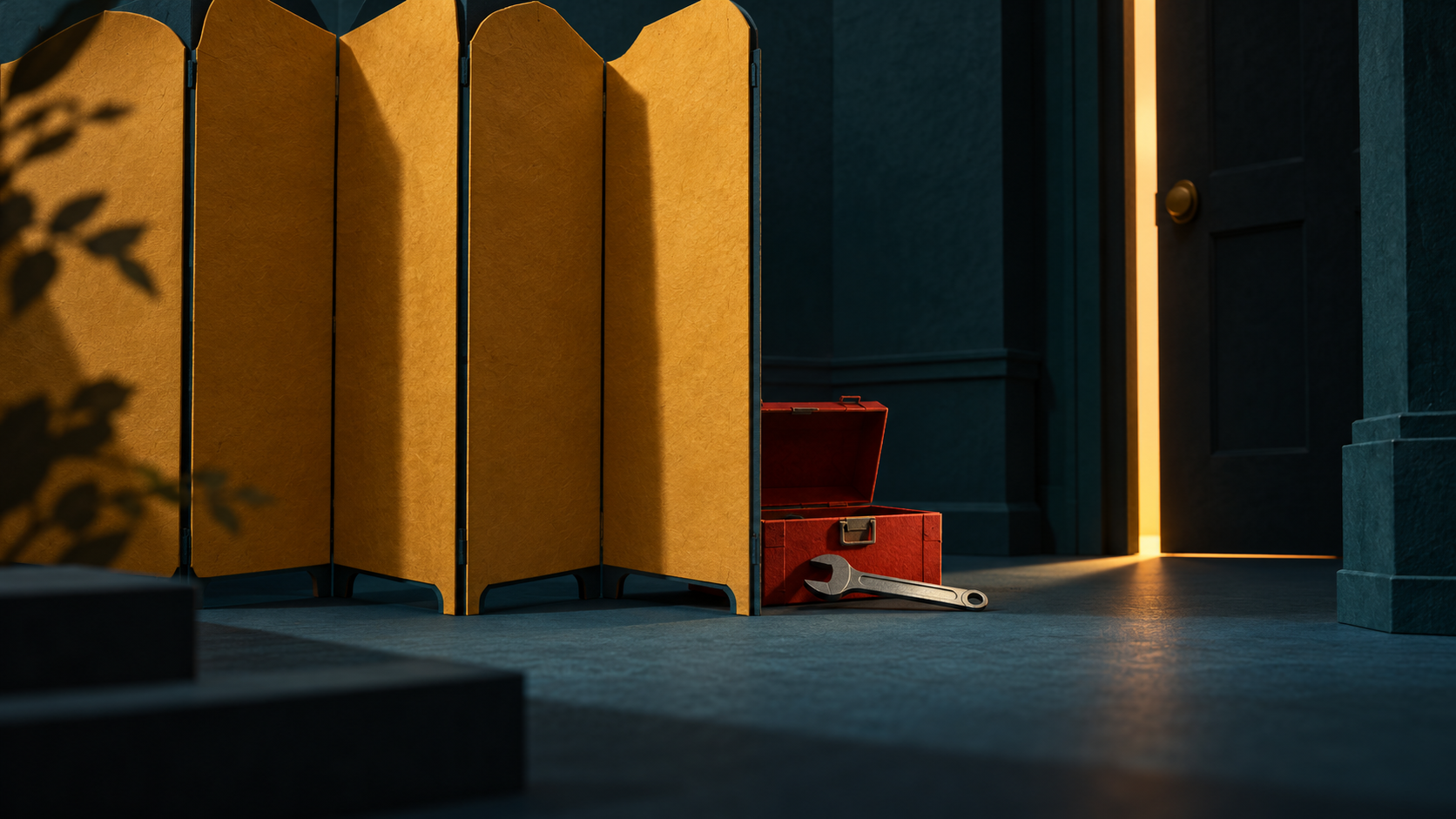
The toolbox shut with one space empty. Rosa checked the floor, then the shelf behind the screen. She had borrowed the spanner to tighten the display stand. Her uncle had counted every tool into its slot that morning.
A car door closed outside.
She knelt. Under the screen, something silver caught the light. The spanner lay just beyond her fingers.
His key scraped in the lock. Rosa flattened her palm and pushed the screen.
A useful choice: the empty slot makes the problem visible. The car door and key move the uncle closer while Rosa remains occupied with a tiny distance on the floor. The paragraph break before the car door gives that sound prominence. You can vary paragraph length to direct attention without breaking every sentence into its own paragraph.
Review your version: identify what the character wants, what impedes them and what changes during the wait. If the reader has no reason to care whether the task finishes, add a specific consequence. If you explain the entire history of the borrowed room, test how much of that history the immediate scene needs.
You could also write this moment with an affectionate uncle and an easily repaired mistake. Tension depends partly on the character's expectations. Let their behaviour make those expectations legible, and decide later whether events confirm them.
5. Revise for a changed effect
Timing: two minutes to select a passage and name an effect, five to revise, three to compare. Use your own short draft or the teaching passage below. Aim to make a character's reluctance easier to recognise through what they say and do. Keep the basic event intact.
Starting passage
Ben was reluctant to give up his Saturday because he was tired. His neighbour asked him to help move a wardrobe. He agreed, although he did not want to, and asked what time.
Sample revision
Ben looked at the unopened crossword on his knee.
'The wardrobe,' his neighbour said. 'It would only take the morning.'
He folded the crossword along its old crease. 'What time?'
A useful choice: the crossword supplies a concrete alternative to helping. Folding it shows Ben setting that alternative aside. The revision makes reluctance available through inference, although it leaves his tiredness unstated. If exhaustion is essential to a later event, restore a precise cue or retain a direct sentence about it.
Follow the crossword through the edit
One object carries a change in Ben's afternoon.
- ON HIS KNEE
The unopened crossword makes his intended leisure visible.
- FOLDED ALONG ITS CREASE
Handling it creates a pause before his answer.
- “WHAT TIME?”
His practical question commits him to helping. The object has prepared us to read the cost.
Test your edit: what can the reader now infer, and what information has disappeared?
Review your version: read both passages and name a gain and a loss. A revision can sharpen an implication while removing a useful fact. Restore whatever the story needs, even if that leaves a mixture of direct explanation and observed action. Save both versions so you can compare the effect tomorrow.
Choose what to keep
Finish by marking one sentence, exchange or decision you would like to develop. Add a short note about why it interests you. You might want to discover who returned the mitten or hear what Dev says after Sal offers a compromise. That question gives your next session a place to begin.
Repeat an exercise with different characters when you want to test a particular choice. These brief sessions provide practice and material for reflection; developing your writing takes further reading, revision and attention over time. A sample response is one possible solution, and your version may be heading towards a different kind of story.
When you want to take a promising fragment further, WriteCraft Pro connects writing techniques with practical exercises and personalised feedback. Bring the passage you kept and a specific question about its effect: that gives your next piece of practice a clear purpose.