Deception in Much Ado About Nothing changes what people believe they have seen, heard and understood. Friends stage conversations to encourage love; Don John turns a staged encounter into an accusation against Hero. A strong thematic paragraph explains how a particular deception works and why its target accepts it. The plot supplies your evidence. Your argument supplies the connection between that evidence and Shakespeare’s treatment of trust.
This guide uses a flexible PETAL framework, then develops a paragraph about Claudio’s response to Don John’s plot. Start with one question: what makes this person willing to believe this story? It will take you further than a catalogue of tricks.
Build an argument about deception
Choose a claim that someone could discuss. “There is deception throughout the play” identifies a topic. “Shakespeare shows how concern for public honour makes Claudio vulnerable to deception” proposes an explanation. You can test that explanation against his words and decisions.
PETAL can help organise the work: Point, Evidence, Technique, Analysis and Link. Use it as a planning aid. A paragraph may need several analytical sentences, a second quotation or a qualification before it returns to the question.
- Point: state what this deception reveals about a character or relationship.
- Evidence: select a short quotation and locate its dramatic situation.
- Technique: name a precise choice, such as metaphor, an aside or dramatic irony.
- Analysis: explain how that choice develops your claim.
- Link: show what the example contributes to the play’s wider treatment of deception.
A technique earns its place when you explain its effect. Calling a quotation a metaphor leaves the reader waiting for the interesting part: what does that comparison make visible?
Before drafting, jot down the deceiver’s aim, the target’s assumptions and the consequence for somebody else. These may pull in different directions. A friend can intend kindness and still use pressure; a villain can invent evidence that succeeds because it fits an existing fear. Keeping those distinctions in view gives your paragraph a line of enquiry.
The gulling scenes: affection and control
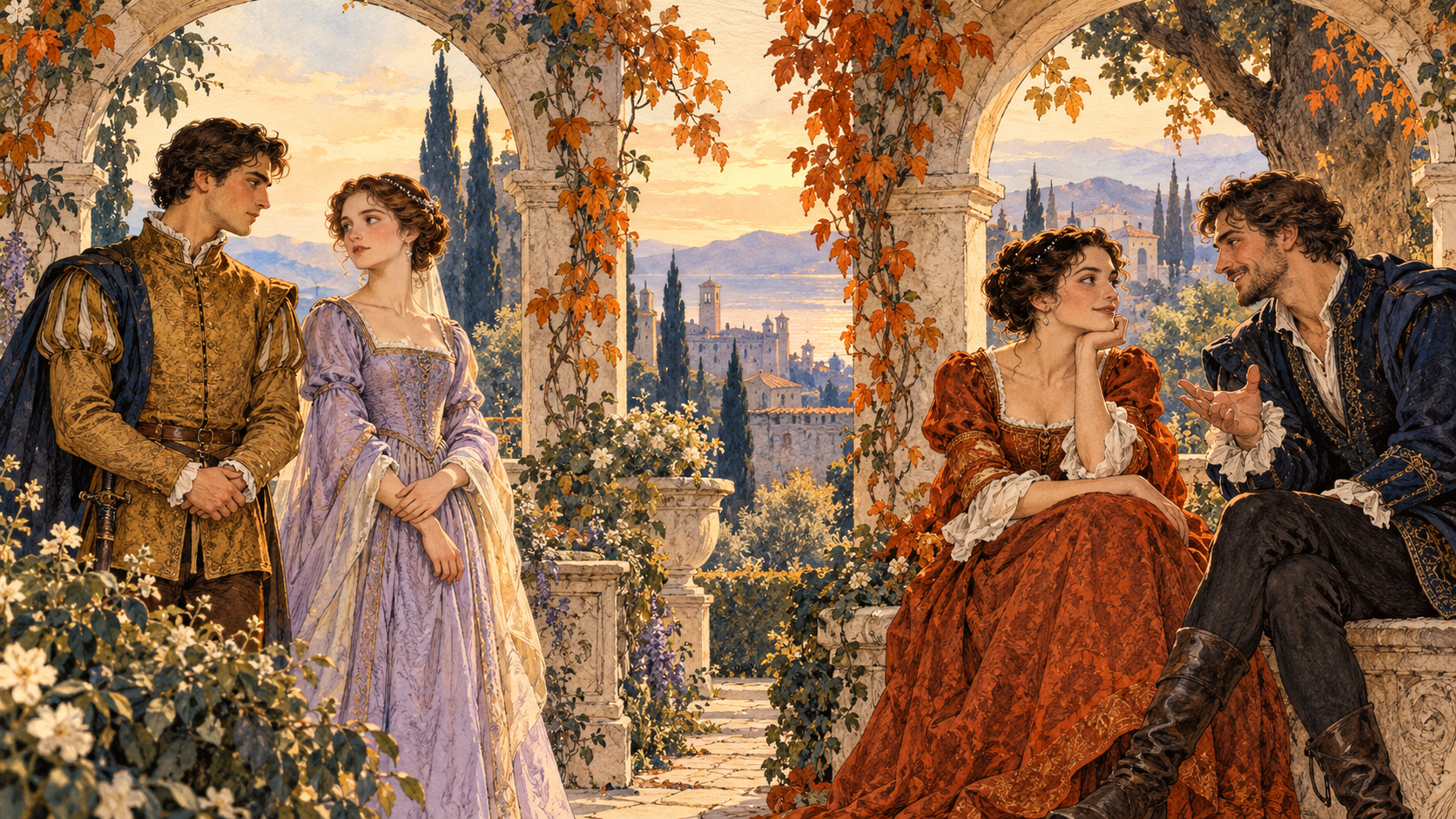
In Act 2, Scene 3, Don Pedro, Claudio and Leonato arrange for Benedick to overhear their account of Beatrice’s love. Hero and Ursula perform a parallel trick on Beatrice in Act 3, Scene 1. Gulling means fooling someone. Here, the audience knows the conversations are staged, creating dramatic irony as the listeners accept them.
Both scenes use fishing imagery. Claudio’s instruction, “Bait the hook well”, makes Benedick an intended catch. Hero calls the invented conversation “false sweet bait”. “Sweet” conveys its attraction while “false” exposes the method. These friends encourage a relationship through carefully managed information. Their success leaves room to question the control they exercise over the lovers’ choices.
For a paragraph, connect the image to the listener’s response. Benedick’s confidence in Leonato’s respectable appearance helps him dismiss suspicion of a trick. Beatrice hears criticism of her pride alongside the claim that Benedick loves her. Each receives a story designed to make change feel necessary. Our analysis of Beatrice and Benedick’s banter follows the defensive wit that these conversations unsettle.
Masks and the masquerade: uncertainty spreads
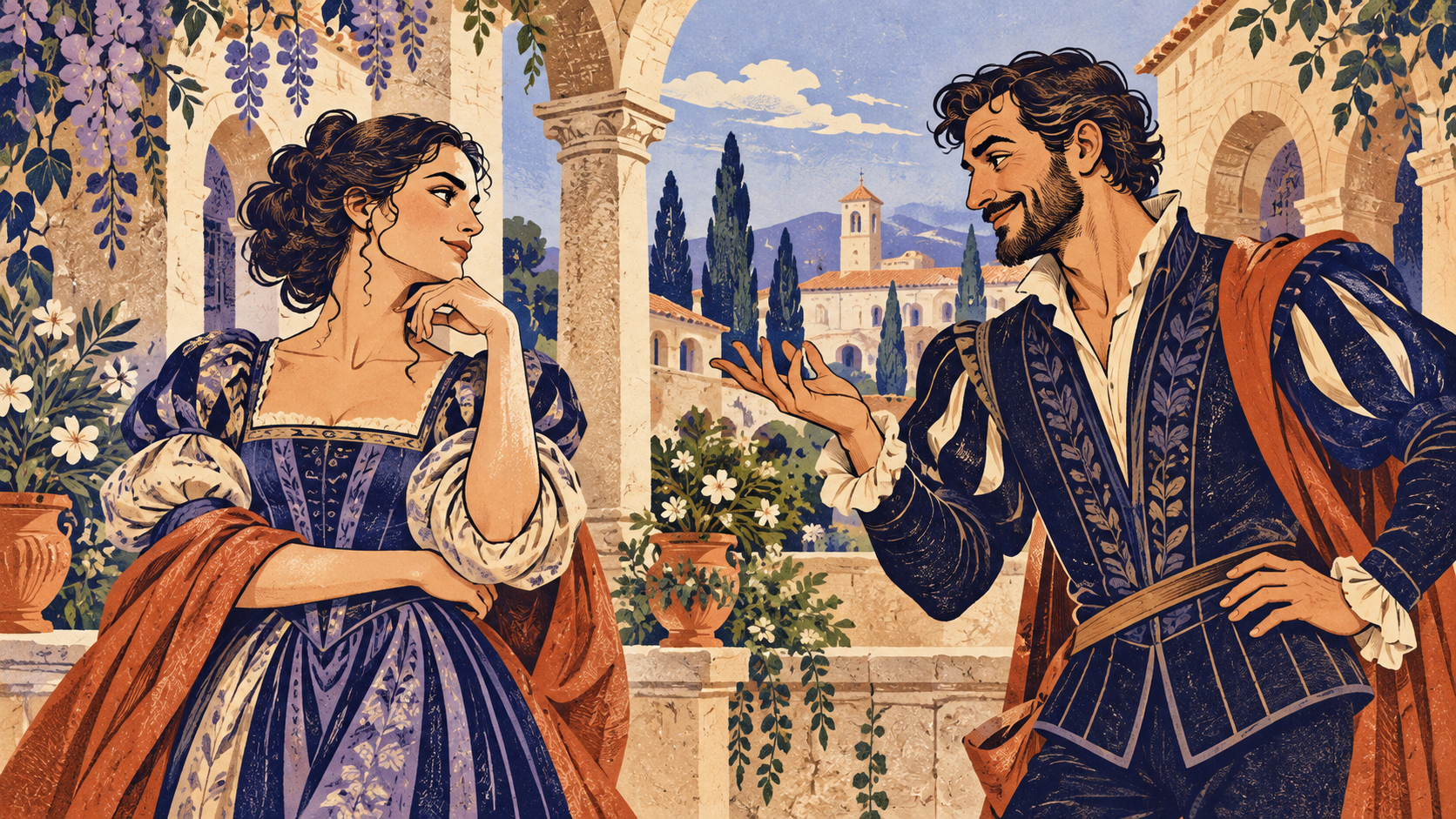
The masked dance in Act 2, Scene 1 complicates a simple division between helpful and harmful deceit. Don Pedro woos Hero on Claudio’s behalf, using disguise to advance his friend’s courtship. Don John exploits the uncertainty by telling Claudio that the Prince wants Hero himself. Claudio quickly accepts this account.
The mask makes identity less secure; Don John supplies an interpretation of the uncertainty. This gives you a useful distinction between theatrical disguise and the story someone builds around it. Even a friendly arrangement can create an opening for suspicion. In an essay about appearance versus reality, identify who controls the explanation of what appears to happen.
Web of deceit: follow the information
Read each route from its makers to its target and consequence. The labels identify motives as well as the colours.
Matchmaking: staged overhearing
- Don Pedro, Claudio and Leonato stage affection for Benedick to hear.
- Hero and Ursula stage affection and criticism for Beatrice to hear.
- The targets reconsider themselves and move towards love; their friends manage the evidence.
Sabotage: staged evidence
- Don John backs Borachio’s plan to wreck the marriage.
- Borachio meets Margaret; Claudio and Don Pedro mistake her for Hero.
- Claudio publicly rejects Hero. Her reputation bears the injury.
Disguise: a vulnerable route
Don Pedro’s masked wooing for Claudio creates uncertainty. Don John’s rival story redirects it into jealousy.
Repair: another invented story
The Friar proposes reporting Hero dead to change how she is valued. The Watch’s discovery and Borachio’s confession expose the actual plot.
Try making a claim from one route through the web. The Much Ado About Nothing course gives you a place to continue studying the play and developing your written responses.
Don John’s plot: who interprets the evidence?
Borachio devises the encounter with Margaret that will be misidentified as Hero’s infidelity. Don John supports the scheme to damage the marriage. Keep their roles clear, and avoid giving Margaret knowledge of the wider plot: Borachio later defends her innocence in Act 5, Scene 1.
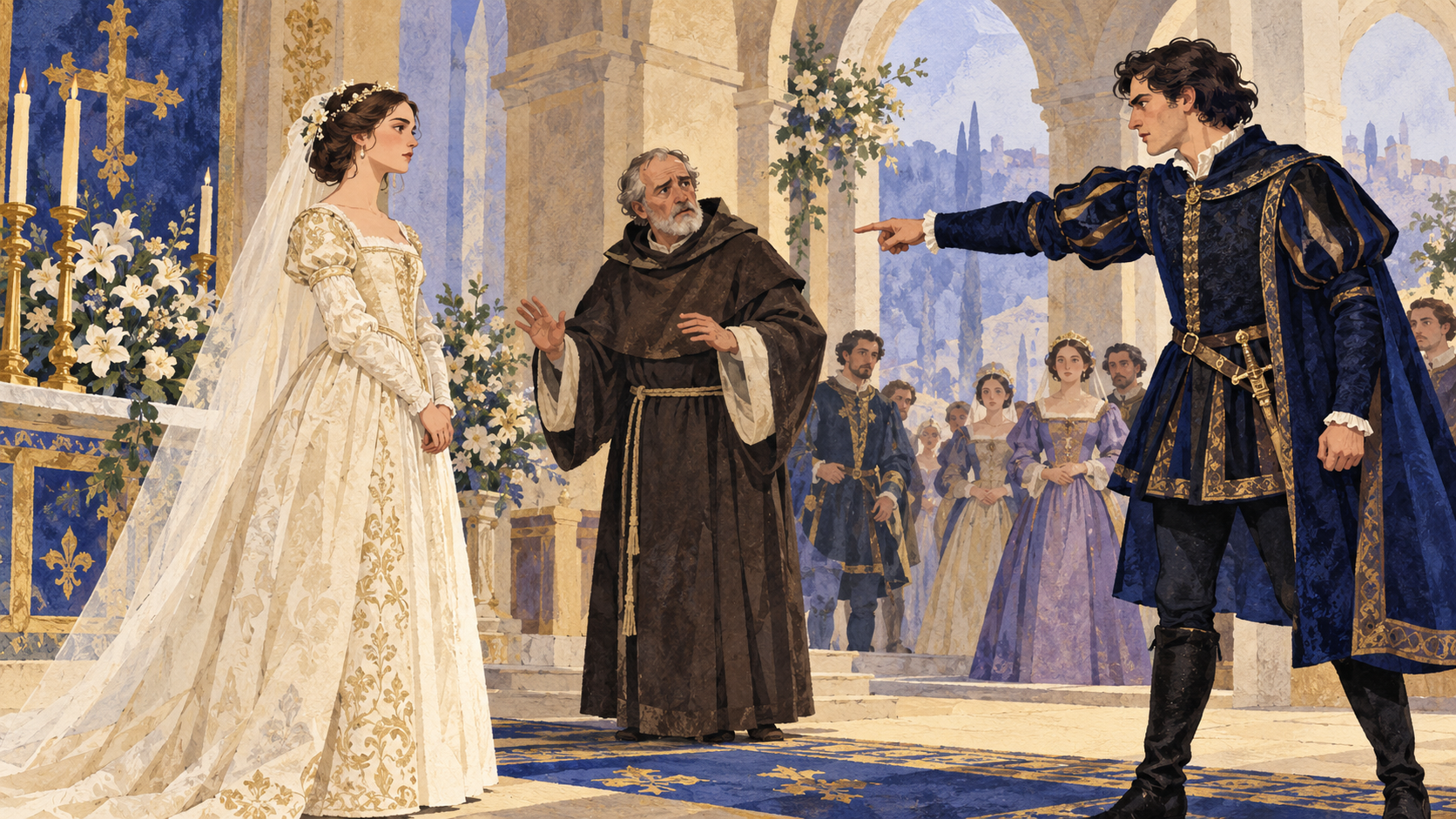
The wedding scene shows the consequences of Claudio’s belief. In Act 4, Scene 1, he calls Hero a “rotten orange”. The image suggests concealed decay beneath an attractive surface. Applied to an innocent woman, it reveals the violence of his judgement. Claudio treats her appearance as evidence of a hidden fault, while the audience knows how his certainty was manufactured.
Paragraph Makeover: move beyond plot summary
Here is an original practice paragraph that records events:
Don John tricks Claudio into thinking Hero has been unfaithful. Claudio believes him and refuses to marry Hero. This shows deception because Claudio has been deceived and Hero is innocent.
The final sentence circles back to the topic without explaining it. Improve the paragraph by choosing Claudio’s public language as evidence and making his readiness to condemn Hero part of the argument:
Shakespeare presents deception as especially destructive when Claudio turns uncertain appearances into public judgement. At the wedding, his description of Hero as a “rotten orange” imagines corruption hidden beneath an attractive surface. The metaphor exposes how completely he has accepted the staged evidence: he speaks as though her guilt can be inspected and discarded. His command to Leonato to take her back also places the accusation within an exchange between men, making her supposed dishonour a threat to their relationships and standing. Dramatic irony sharpens the cruelty because the audience knows Hero is innocent. Don John’s scheme therefore gains its force through Claudio’s willingness to protect his honour by shaming the woman he claims to love.
The point establishes an interpretation. The quotation and metaphor give it a focus. The following sentences connect language, social reputation and the audience’s knowledge. The closing sentence explains how the deceiver’s scheme and the target’s judgement work together. Follow that reasoning in your own words, using evidence suited to your argument.
Notice the difference between Claudio’s belief and the paragraph’s judgement of it. “Rotten” describes his view of Hero; the analysis makes clear that this view is false. Keep that separation whenever you discuss slander. Otherwise, a sentence intended to explain the accusation can accidentally repeat it as fact. Describe the speaker’s assumption explicitly, then test it against what the audience knows.
Test the argument with a complication
The Friar’s proposal to report Hero dead in Act 4, Scene 1 offers a useful complication. He hopes absence will change Claudio’s valuation of her. Deception becomes part of the attempted repair, while the Watch’s discovery of Borachio’s boasting leads to the exposure of the original fraud. Keep the invented death and the discovery of the truth distinct.
Write your own paragraph about the gulling scenes using one fishing image. Explain the attraction of the bait, identify the listener’s vulnerability and qualify the friends’ benevolent motive. Then check whether every sentence develops the claim. Replace a repeated event with an explanation of a word or stage action.
You now have a way to trace how a story becomes believable and who pays for that belief. Take another scene through the same process in the Much Ado About Nothing course, building a fresh interpretation from the language on the page.