
Beatrice can turn a polite conversation into a cross-examination. In Much Ado About Nothing, her wit challenges the assumption that men should direct women’s lives. Yet her anger after Hero’s humiliation reveals the limits of verbal confidence. Studying gender roles in Much Ado About Nothing means following both her freedom to speak and the obstacles to making her judgement count.
For an essay, ask who controls each exchange and whose account receives belief. This gives you a precise way to discuss patriarchy: a social order in which authority is concentrated in male hands. The play tests that order through marriage, reputation and the defence of a wronged woman.
How does Beatrice challenge expectations of marriage?
In Act 2, Scene 1, Beatrice asks whether a woman should be “overmastered with a piece of valiant dust”. The verb “overmastered” makes marriage sound like subjection. “Dust” reduces the supposedly superior man to ordinary mortal material, while “valiant” gives his grandeur a comic wobble. Her joke puts male claims to authority under inspection.
Follow the exchange around it. Leonato anticipates her marriage; Beatrice answers with her own assessment of husbands. She insists on a speaking part in a future others discuss for her. Her later refusal of Don Pedro’s proposal also demonstrates room for choice within this household.
Keep the claim proportionate. Her family tolerates considerable frankness, and she participates in its festivities. You can describe Beatrice as an unconventional woman while recognising the protection and social position that make her particular independence possible. For closer work on her verbal tactics, try our analysis of Beatrice and Benedick’s banter.
Use context to explain a particular pressure
The fictional setting is Messina. Shakespeare’s late Elizabethan English theatre gives the play another context, with its own conventions and audiences. Keep those locations distinct. A useful contextual observation explains why a word, action or conflict carries force; a general history paragraph can leave your quotation stranded.
The RSC’s staging guidance identifies unequal freedoms for men and women in Messina and invites directors to make those expectations visible. In your reading, look for the mechanism: who arranges a match, who judges sexual reputation, or who can issue an honour challenge? These questions turn a broad theme into something you can demonstrate.
English professional public stages used male casts, with boys or young men commonly playing women’s roles. That convention adds a possible performance irony to Beatrice’s wish to be a man. It does not tell us how every original spectator responded. Women also participated in theatre and other performance in varied ways; exclusion from these acting roles cannot support a claim that women had no agency anywhere.
Give Hero’s voice its proper weight
Hero helps arrange the garden conversation in Act 3, Scene 1, steering Beatrice towards Benedick. She can organise a performance, judge her cousin and influence an outcome. The scene complicates any easy division between a passive Hero and an active Beatrice.
It also exposes pressure on Beatrice herself. After overhearing criticism, she promises to requite Benedick’s love, imagining her heart being tamed. You might read this as openness to affection, submission to an approved feminine role, or an uneasy combination. Explain which detail supports your emphasis.
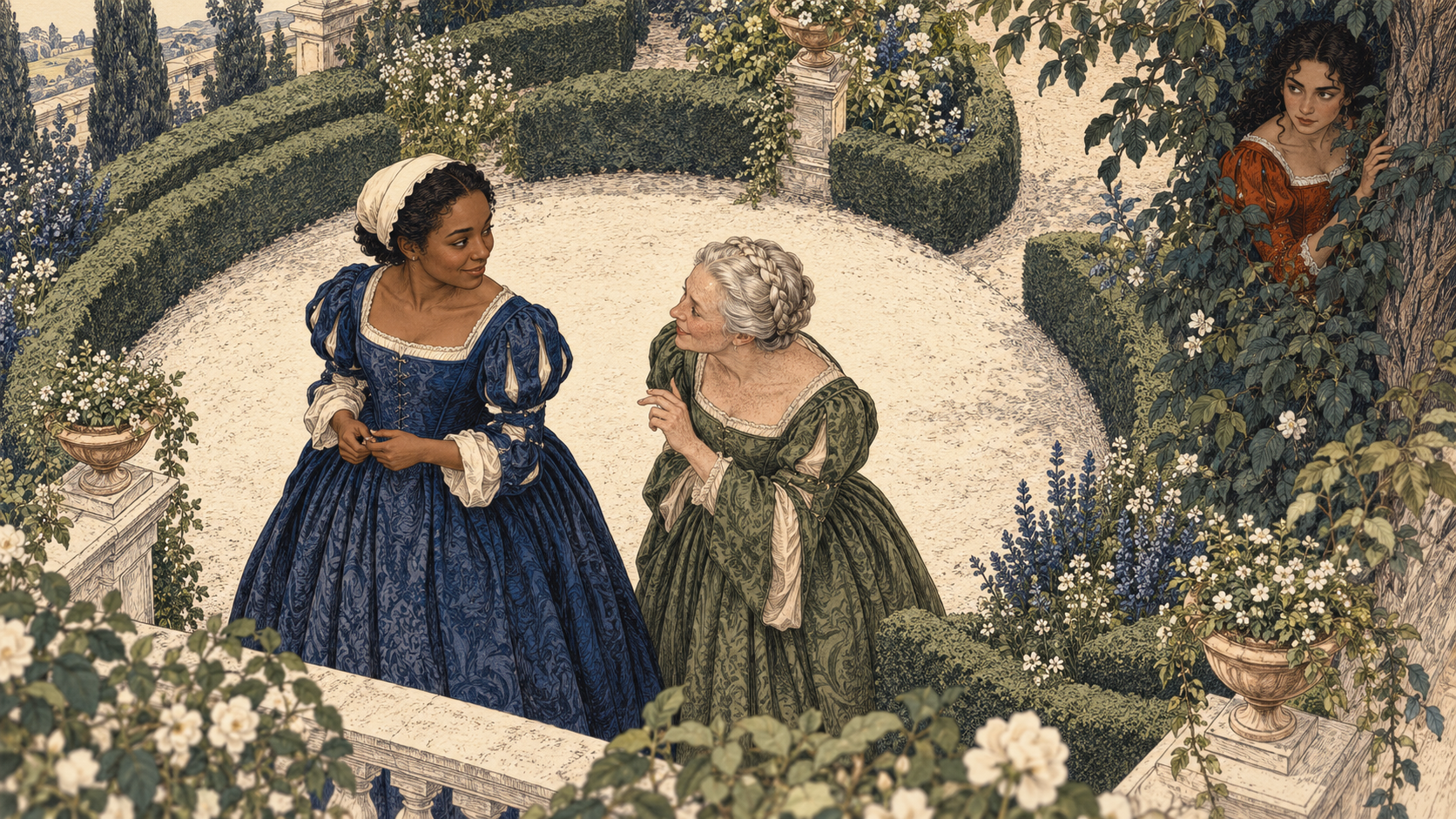
Hero’s confidence among women invites a staging question: does her posture change when powerful men enter? A performer might give her expansive gestures in the garden and restrained movement at the ceremony. That contrast is an interpretive possibility. Build your argument from the dialogue and situation before proposing what a production could show.
At the wedding, Hero asks, “Is my lord well that he doth speak so wide?” Her question challenges Claudio’s extraordinary accusations. The problem is that her answers carry little authority against the men’s supposed testimony. Distinguish the presence of a voice from the power to secure belief. That distinction sharpens a comparison with Beatrice, whose anger makes Hero’s treatment impossible for Benedick to dismiss comfortably.
Why does Beatrice wish she were a man?
After Hero’s public accusation in Act 4, Scene 1, Beatrice exclaims, “O, that I were a man!” Her wish concerns the power to answer a public injury. She asks Benedick to act against Claudio, making his loyalty to her cousin a test of their relationship. Her demand draws on the violent masculine honour system she finds inaccessible.
This makes her challenge ethically uncomfortable. She recognises injustice, yet the remedy she seeks could kill. An essay can hold those ideas together. Ask whether the scene exposes the inadequacy of the available routes to justice.
Who gets heard in Messina?
Read the space between a woman’s words and their effect.
The household / 2.1
Moment: Beatrice questions being overmastered.
Expectation: marriage places a woman under male direction.
Essay opening: examine how her earthy joke shrinks masculine prestige.
The accusation / 4.1
Moment: Hero answers; powerful men disbelieve her.
Expectation: a woman’s chastity sustains her social standing.
Essay opening: separate speaking from being credited.
Between the two: Beatrice’s outrage asks whether a woman’s judgement can compel action.
Context Integration: build an argument from one word
Try revising this broad sentence: “Beatrice is strong because women were oppressed.” Choose a short quotation from Act 2, Scene 1. Identify one word that suggests a power relationship, then explain how the surrounding exchange makes that relationship visible. Here is one original model:
Beatrice’s verb “overmastered” presents marriage as a struggle over authority. By reducing a prospective husband to “dust”, she punctures the prestige that might justify his command. In a household where her uncle anticipates her marriage, her joking reply asserts a right to judge that future herself. Her wit exposes the assumption that a husband deserves mastery.
The context belongs inside the reasoning: the household’s expectations explain the pressure behind the joke. Where your assessment uses AO3, follow its specific requirements for context. Check that every historical claim has evidence and that your paragraph still makes sense as an interpretation of these words.
Try a second context connection
Now write two sentences about Beatrice’s wish to be a man. Begin with the immediate situation: Hero has been publicly disgraced, and Beatrice wants someone to confront Claudio. Connect the wish to access to the masculine honour code. Then add a qualification about the violence of the response she requests.
One possible approach is: Beatrice’s imagined change of gender reveals how strongly public redress is associated with masculine action in this scene. Her appeal to Benedick gives her judgement practical force, while her desired remedy shows the danger of answering injury through violence.
Compare that response with your first attempt. Have you explained what the contextual point helps us understand? If removing the history leaves your analysis unchanged, strengthen the connection to the particular wording. Avoid guessing Shakespeare’s private intentions or claiming that an entire audience shared one opinion.
Leave room for the ending’s ambiguity
Beatrice chooses marriage to Benedick, and the exposed love poems help reveal mutual feeling. The closing kiss can suggest affectionate equality; a production can also make his attempt to stop her mouth troubling. Explain the performance choice behind your reading. Calling her a modern feminist requires qualification, since that label brings later political ideas to an earlier play.
A focused conclusion can trace how Beatrice makes male authority answerable through language, then show where her freedom remains constrained. Carry one tension through your essay and test it against another scene. That gives your argument room to develop.
To develop this reading, follow how a joke about marriage becomes a demand for loyalty after the wedding collapses. Our Much Ado About Nothing course offers scene-by-scene study and writing challenges with personalised feedback.