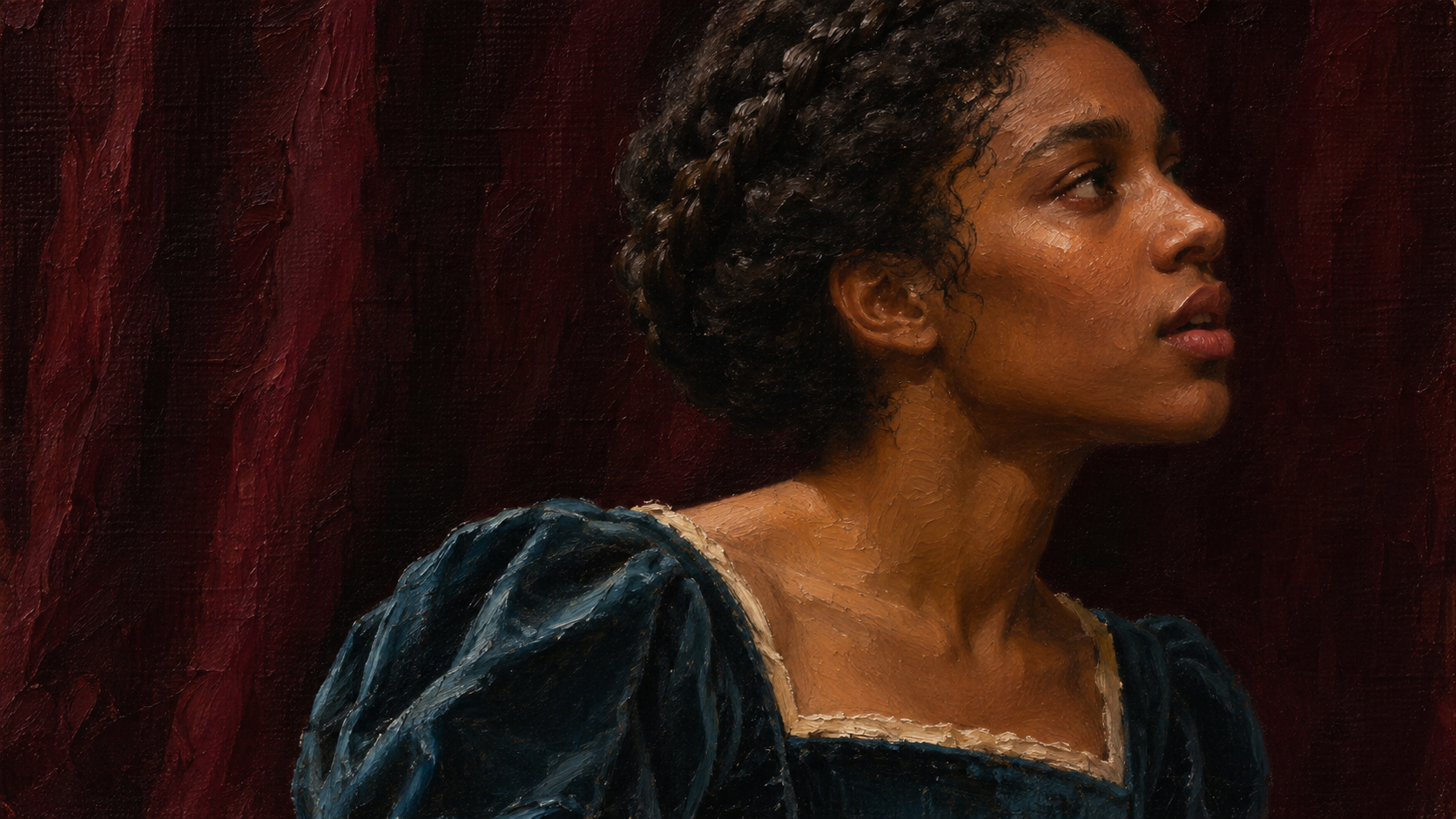
Macbeth begins with a reputation for courage. Before he appears on stage, other people have already praised his fighting. Yet the word man becomes a surprisingly unstable badge: a wife can threaten to take it away, a king can make hired killers compete for it, and a grieving father can insist that it includes sorrow.
Masculinity in Macbeth is a struggle over what courage permits and what feeling requires. Shakespeare gives competing definitions to characters with urgent reasons for using them. Following those arguments helps an essay move beyond the broad claim that the play links men with violence.
Courage and Macbeth’s first moral limit
In Act 1 Scene 2, the Captain calls him “brave Macbeth” while describing his brutal effectiveness in battle. Violence brings public recognition when it serves Duncan’s cause. This opening complicates any argument that the tragedy simply replaces violent masculinity with peaceful goodness: the society we first encounter already rewards a warrior’s capacity to kill.
By Act 1 Scene 7, Macbeth faces a different use of force. Duncan is his king, relative and guest. Macbeth has identified obligations that should protect him, alongside the consequences of assassination. His hesitation contains ethical judgement as well as fear of failure.
“I dare do all that may become a man.
Who dares do more is none.”
Here, become means befit or be appropriate to. Macbeth defines manhood through a limit: certain actions would destroy the moral identity they supposedly prove. The repeated “dare” makes restraint part of his argument about courage. A brave person can recognise a boundary.
That position soon collapses, which gives the exchange its tragic force. Macbeth can articulate the objection he will override. For the wider pattern of his decisions, our guide to how Macbeth changes throughout the play follows the character’s developing responsibility.
How Lady Macbeth challenges his manhood
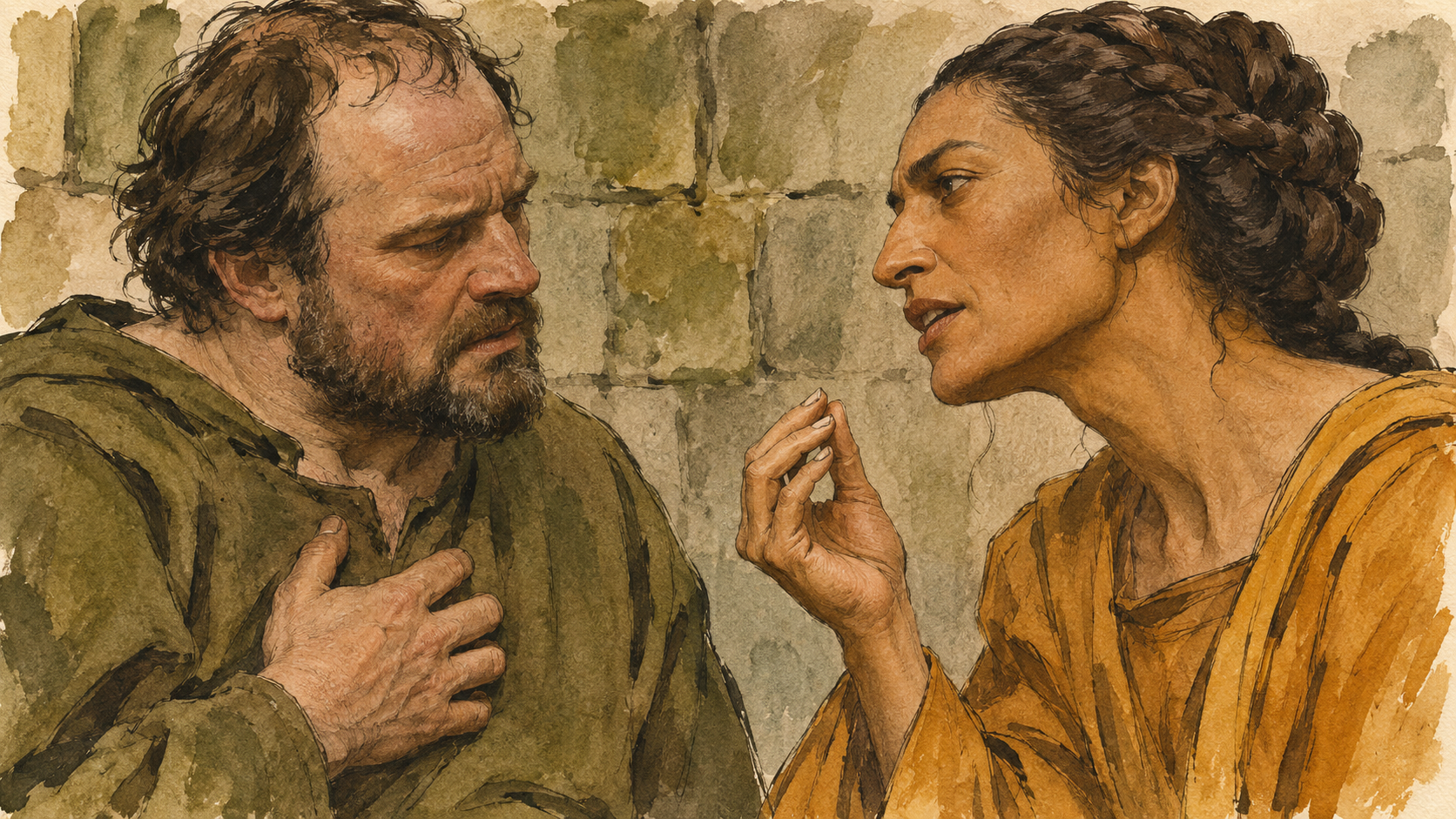
Lady Macbeth makes his sense of identity conditional on carrying out the murder. In Act 1 Scene 7, she tells him, “When you durst do it, then you were a man”. Durst means dared. Her phrasing turns a willingness to act into the test by which he deserves the name.
The tactic is personal. She connects his hesitation with cowardice and questions his love. He must now defend his standing within the marriage while considering an assassination. The pressure narrows the apparent choice: keeping her respect seems to require abandoning his earlier limit. Her account is persuasive because it presses on a reputation he already values.
She also invokes a previous commitment. Macbeth has raised the enterprise with her before this exchange, although the audience has not watched that conversation. An essay should therefore keep his agency visible. Her pressure contributes to his decision; his own ambitions and choices remain part of the explanation.
Her earlier appeal to the spirits, “unsex me here” in Act 1 Scene 5, helps explain the values behind her attack. She asks for cruelty and for remorse to be blocked. She imagines qualities associated with her female body as obstacles to the deed she wants accomplished. Her speech exposes the gender assumptions she is trying to use and escape.
Calling Lady Macbeth simply “masculine” can flatten this tension. She claims authority through a vocabulary that associates determination with men, even as her own forceful intervention unsettles that association. Her horrific image of killing a nursing child then makes an imagined promise outweigh tenderness. The extremity of the example reveals how much feeling her version of resolve must suppress.
The pressure returns at the banquet in Act 3 Scene 4. Faced with Macbeth’s response to Banquo’s ghost, she asks, “Are you a man?” In this setting, manhood also demands control over a visible reaction. The private test has followed them into a public crisis.
Comparing these exchanges is useful practice in reading a speaker’s purpose. The Macbeth course offers scene explanations and writing challenges for developing that kind of close analysis.
Macbeth turns the test on the murderers
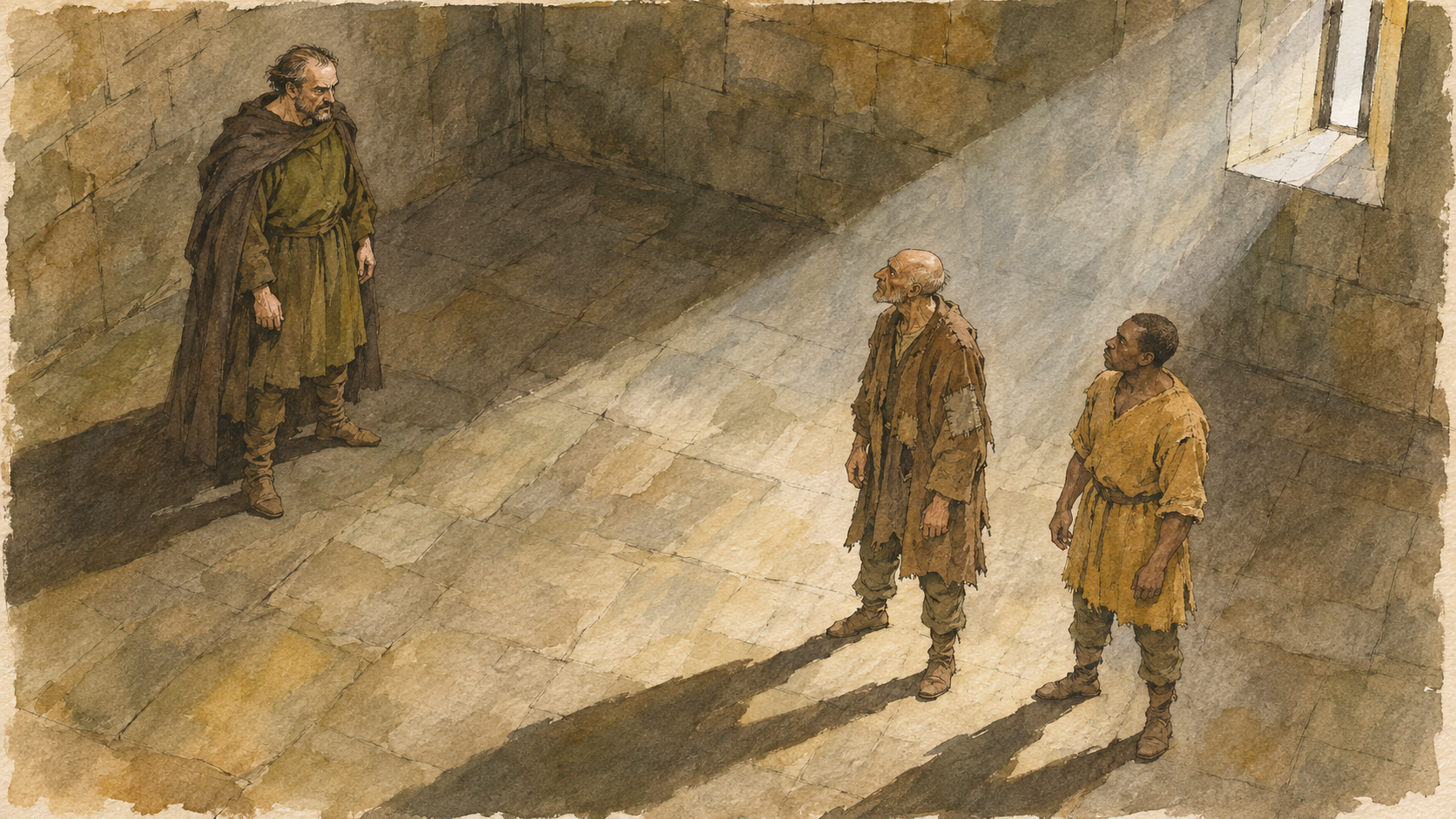
In Act 3 Scene 1, Macbeth uses a recognisable version of the same pressure while arranging Banquo’s death. One murderer answers him, “We are men, my liege.” Macbeth replies by distinguishing the simple category of men from the rank they might occupy within it.
His comparison lists different kinds of dogs. All share a name, yet they differ in their abilities and supposed value. The analogy gives him a way to sort his listeners and challenge their standing. His reference to the “worst rank of manhood” makes acceptance of the killing seem like an opportunity to rise above disgrace.
Notice the change in Macbeth’s role. Earlier, he resisted a definition that made murder proof of manhood. Here he applies such a definition to other people. The recurring tactic connects the scenes, showing how a method of persuasion can be adopted by the person who once experienced it.
The murderers also speak of hardship and anger. Macbeth exploits those grievances and directs them towards Banquo, whom he blames for their suffering. His accusation serves his recruitment: the scene supplies no independent proof that Banquo caused their misfortunes. Keep the distinction clear between a ruler’s claim and an established fact.
MAN
A word whose definition is under pressure
Conduct with a limit
Macbeth, 1.7
“may become a man”
Worth depends on what befits a person. Restraint can protect it.
Consequence: he has a reason to refuse Duncan’s murder.
A status to prove
Lady Macbeth, 1.7
“then you were a man”
Worth depends on carrying out the deed. Hesitation puts status at risk.
Consequence: shame helps press him towards murder.
ALSO
Macduff’s addition, 4.3: feeling belongs in the definition.
He retains the intention to act while claiming space for grief. Revenge remains part of the scene.
What Macduff means by feeling as a man
Act 4 Scene 3 tests another definition. Ross tells Macduff that his wife and children have been killed. Malcolm urges him to “Dispute it like a man”, directing his response towards action and revenge. Macduff answers:
“I shall do so,
But I must also feel it as a man.”
The small word “also” carries the comparison. Macduff accepts the prospect of action while insisting on his capacity to grieve. Feeling belongs within manhood. His memories of the people he loved give that statement its substance: sorrow registers their value and the reality of what has happened.
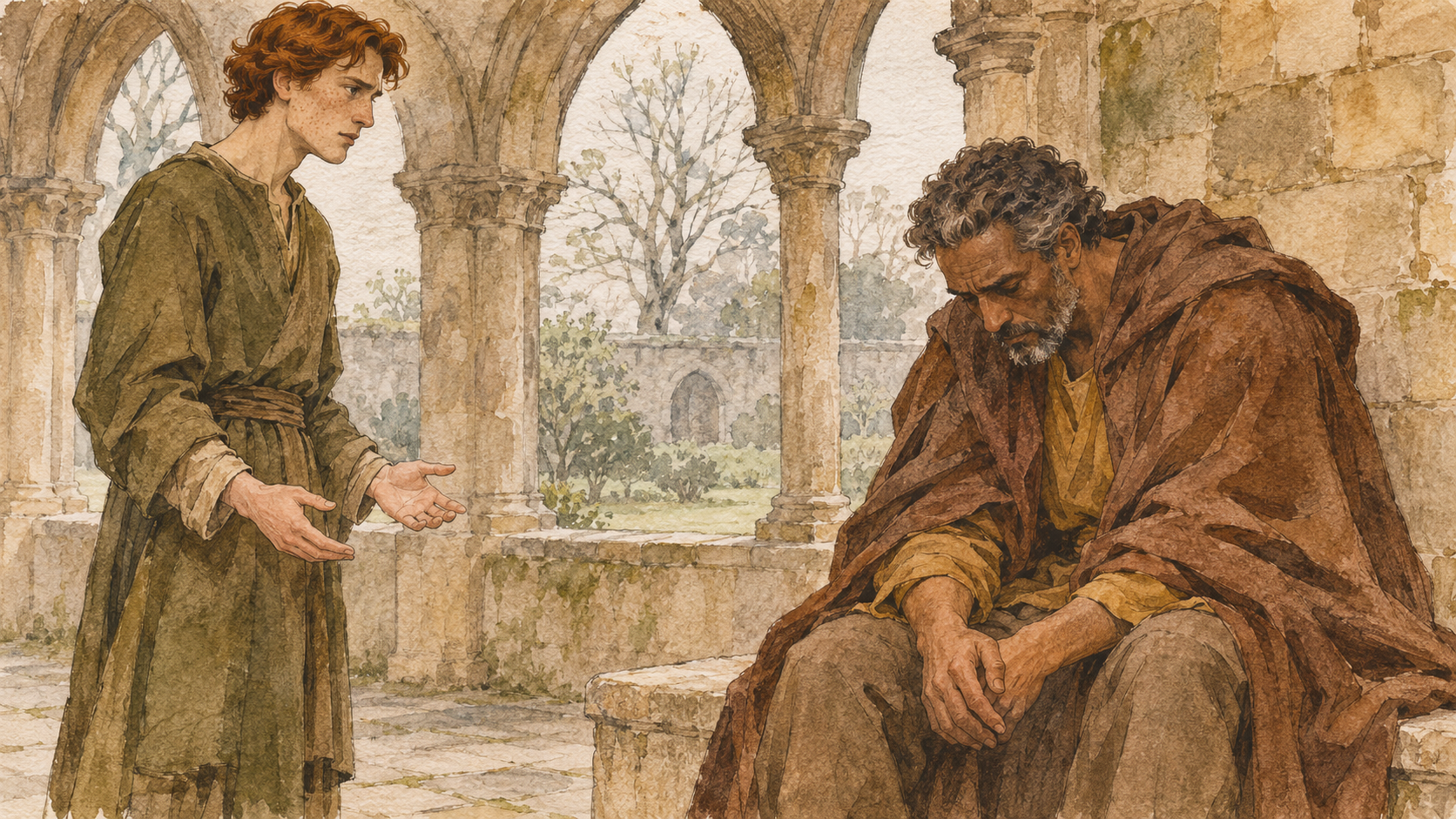
This offers a powerful counterexample to the Macbeths’ efforts to suppress compassion. Macduff’s response allows human attachment to be expressed. It also interrupts the pace Malcolm proposes. Before grief becomes a motive for battle, the loss needs words.
Malcolm’s position deserves a careful reading too. He has already encouraged Macduff to give sorrow speech before urging revenge. His responses contain sympathy alongside the practical desire to turn a bereaved ally towards their common enemy. Treating him as someone who only orders emotional silence would misrepresent the exchange.
Nor does Macduff step entirely outside the play’s gendered language. Later in the same scene, he associates tears with playing a woman, while Malcolm welcomes the movement towards revenge as manly. These details complicate a neat ending in which one character supplies a fully settled alternative. The scene makes space for feeling while retaining pressure towards martial action.
Building a precise argument about masculinity in Macbeth
Start with a relationship between scenes. A useful argument might trace how a word changes its function: Macbeth first uses manhood to defend a moral limit, Lady Macbeth uses it to challenge him, and he later turns it into a recruiting tool. Macduff’s response then widens the definition to include grief.
Keep historical context close to the language it explains. The play draws on expectations connecting male honour with courage and women with nurture. Its characters expose strains within those expectations. A claim that every Jacobean spectator held one identical view of men and women would need evidence the text alone cannot supply. Analyse the specific pressure operating in the scene before introducing a broad statement about society.
Here is an original model paragraph:
Shakespeare presents manhood as a claim that can be manipulated to secure violence. Macbeth’s early assertion that he will do what may “become a man” makes ethical restraint part of masculine conduct. The verb “become” connects identity with behaviour worthy of the name. By Act 3 Scene 1, however, his reference to the “worst rank of manhood” makes that identity competitive: the murderers must defend their standing by accepting his task. The change in speaker and purpose shows Macbeth adopting the pressure he once resisted. His later authority depends partly on making other people anxious about their own worth.
The paragraph follows a change and explains how particular words support it. A second paragraph could test its account of violence against Macduff’s “also”, then consider the continued pull of revenge. That would develop the argument while allowing the evidence to make it less tidy.
A claim-revision exercise
Try revising this broad claim: “Shakespeare shows that real men are violent and hide their feelings.” It merges several speakers’ positions and leaves little room for disagreement within the play.
- Choose two moments that define manhood differently, such as Macbeth’s limit in 1.7 and Macduff’s grief in 4.3.
- Identify the speaker, listener and immediate purpose in each moment. Explain one short word or phrase before adding context.
- Write a revised claim that names the conflict. Then add one detail that complicates your claim.
A possible revision is: “Shakespeare stages a conflict between manhood measured through violent action and manhood that can include moral restraint and grief.” To develop it, note that Macduff still intends to fight and Malcolm still praises revenge. The claim can hold those tensions without pretending the play has resolved them all.
Check the result by asking whether a reader could point to your chosen scenes and see how you reached the interpretation. Keep the verbs precise: a character pressures, ranks, resists or insists. Each verb gives the analysis something observable to explain.
A word as familiar as “man” can organise an entire essay when its changing uses are read closely. To practise moving from a scene’s language to a sustained interpretation, explore the guided reading and writing challenges in the Macbeth course.