Sleep should let a day end. In Macbeth, the day keeps coming back. Duncan sleeps under a host's roof; Macbeth imagines that he has murdered sleep itself; Lady Macbeth eventually walks and speaks while asleep. Across these scenes, sleep imagery in Macbeth connects bodily rest with innocence, trust and the possibility of a mind being repaired.
The motif changes as the play develops. A motif is a recurring detail whose different appearances build meaning. Here, rest begins as something a person can expect from the night, then becomes a measure of what violence has destroyed. Following that change gives an essay a clear argument, with each scene contributing a new stage.
Contents
Duncan's sleep and a host's duty
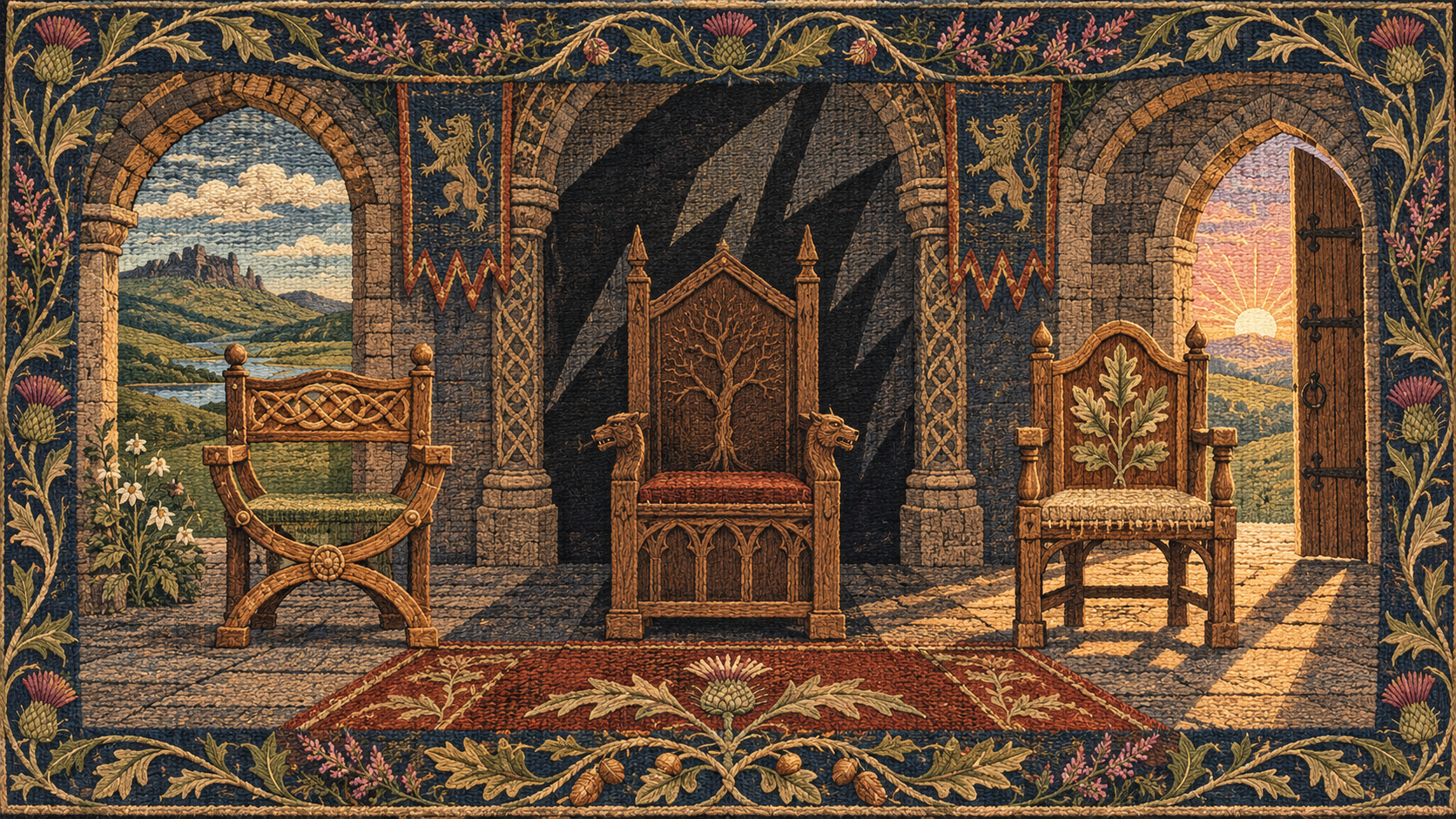
In Act 2, Scene 1, Banquo reports that Duncan has gone to bed pleased with his welcome. The king has sent gifts to the household and a diamond for Lady Macbeth. These domestic details make his trust visible: he is a guest who believes the arrangements around him are safe.
Sleep makes that trust physically dangerous. Duncan must surrender awareness inside the house of the man planning his murder. His vulnerability exposes Macbeth's abuse of hospitality. A bed, usually a place of shelter, becomes the place where a host can reach an unguarded guest.
The rest of the household is already uneasy. Banquo feels the weight of tiredness and asks heavenly powers to restrain the thoughts that arrive in sleep. His resistance shows that a troubled night can involve temptation before a crime has been committed. An essay should therefore attach its interpretation to the particular sleeper: Duncan's trusting repose and Banquo's anxious wakefulness do different dramatic work.
What Macbeth means by murdering sleep
After killing Duncan, Macbeth tells Lady Macbeth that he thought he heard a voice in Act 2, Scene 2. The audience receives this through Macbeth's account. Shakespeare leaves room for a production to emphasise conscience, fear or a more mysterious experience. Describing it as a reported voice keeps the analysis faithful to what the dialogue establishes.
“Macbeth does murder sleep”
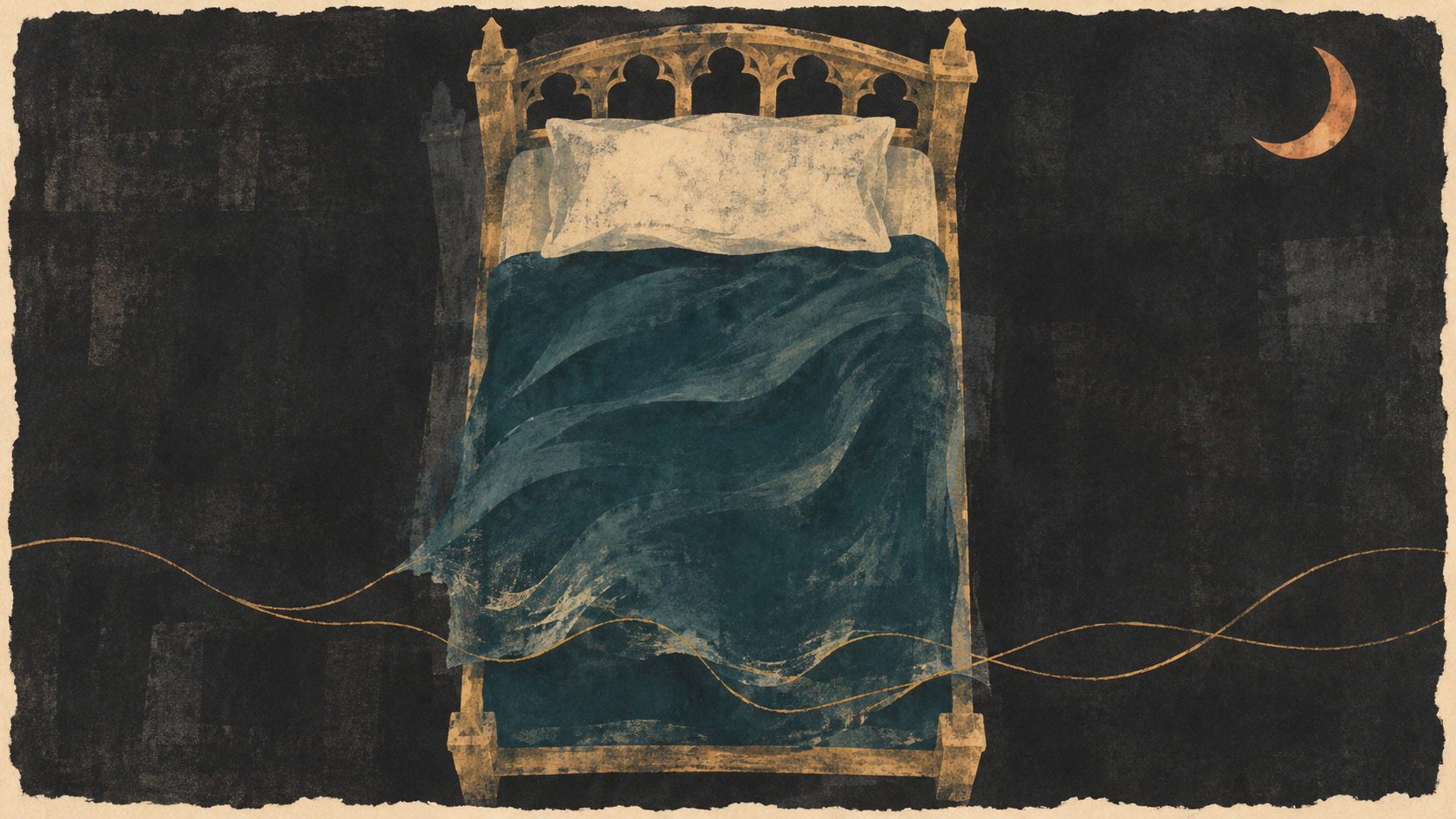
Macbeth's words turn sleep into a further victim. Duncan is dead, and the capacity for innocent rest seems injured with him. The present-tense verb makes the action feel immediate, as though the murder continues to happen while Macbeth tries to describe its consequences.
The following images explain the value of what he believes he has lost. Sleep gathers up the strain of living, tends to weariness and feeds life. His speech gives an ordinary nightly experience an extraordinary range of useful jobs. Murder has interrupted a whole repair service.
“Sleep that knits up the raveled sleave of care”
Annotate the verb: “knits up” presents sleep as a patient act of making something whole. The movement gathers scattered material into a connected fabric. This gives the reader a concrete image for the mind recovering from a difficult day.
Annotate the material: “sleave” here means silk in loose threads. The wording makes care feel tangled and difficult to handle. Read the line slowly: the restorative verb answers the disorder in the material. That relationship is the useful point to explain in a paragraph.
Connect the image to the scene: Macbeth can describe repair beautifully just as he feels excluded from it. This gap gives the speech its ache. He understands sleep's generosity at the moment he imagines that he has forfeited it.

The phrase about innocent sleep also gives the murder a moral reach. Macbeth has attacked a defenceless king and damaged his own expectation of peace. Our separate guide to the supernatural in Macbeth explores the play's uncertain experiences in detail; here, the important consequence is the loss of rest.
A king who cannot settle
By Act 3, Scene 2, Macbeth wears the crown and describes nights shaken by terrible dreams. This qualifies any claim that he literally never sleeps again. The play presents disturbed sleep as well as the fear of sleeplessness. The voice's warning becomes a dramatic pattern of unrest.
Macbeth also imagines the dead Duncan sleeping securely in his grave. His victim has become the person whose peace he envies. Death and sleep overlap in Macbeth's language because both appear to release Duncan from the threats that surround a living ruler. This is Macbeth's embittered comparison, shaped by his own fear.
The crown has brought him reasons to stay alert. His thoughts turn towards Banquo and the danger he sees in Banquo's descendants. The audience can connect the restless nights with the decisions through which Macbeth tries to secure his position. Each new act of violence gives fear fresh material to work on.
The motif also reaches beyond the royal bedroom. In Act 3, Scene 6, a lord hopes that resistance to Macbeth will restore food to tables and sleep to nights. Ordinary rest becomes part of Scotland's political recovery. A ruler's failure can be measured in what his people struggle to do at home.
To practise following these changes from scene to scene, explore the explanations and writing challenges in our Macbeth course.
Why Lady Macbeth's sleepwalking matters
Act 5, Scene 1 puts a sleeping body before the audience. A doctor and gentlewoman watch Lady Macbeth walk, rub her hands and speak. Her eyes are open, but the gentlewoman explains that their perception is closed. The scene separates visible activity from conscious awareness.
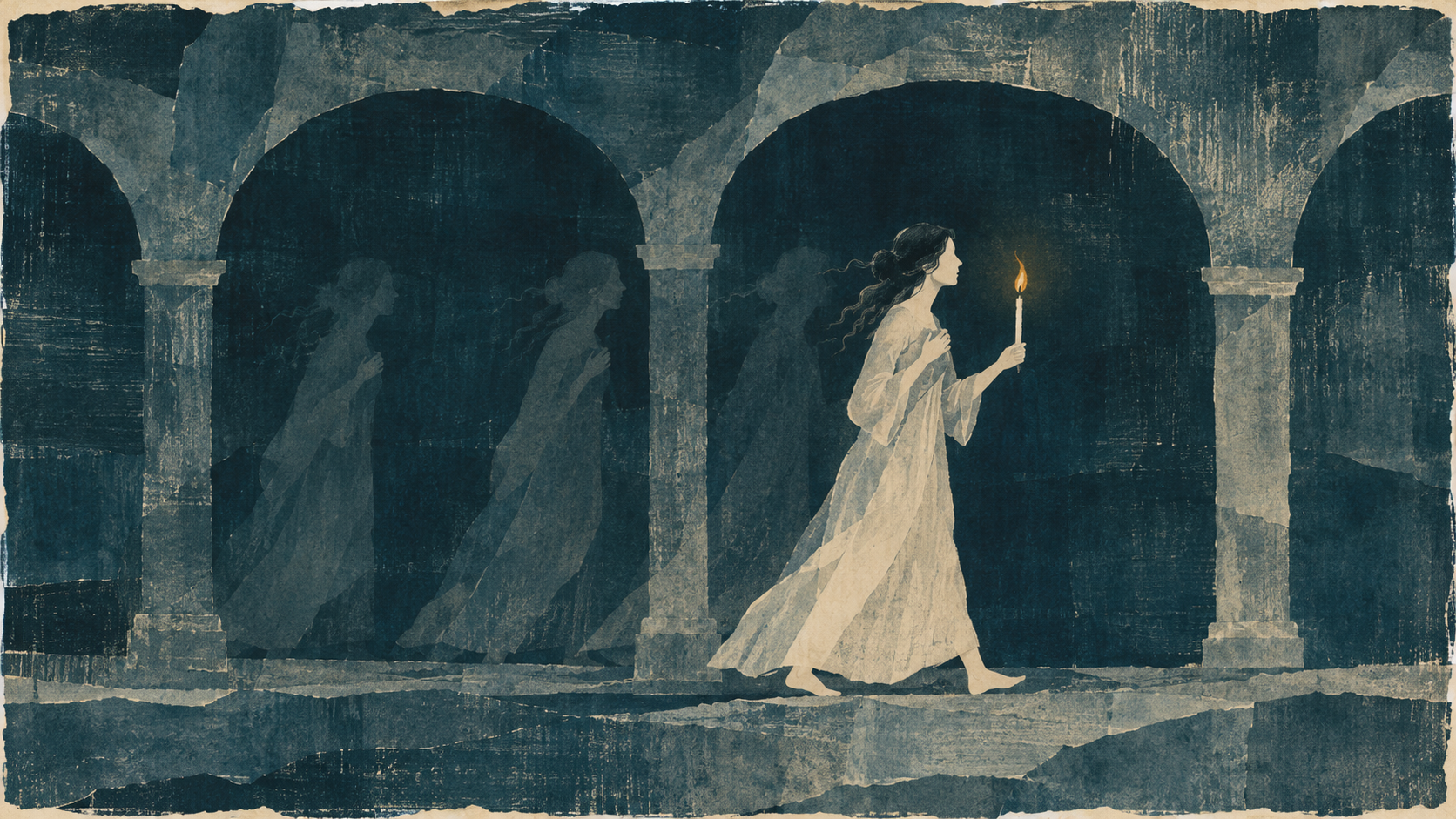
Physical sleep has failed to give her the relief Macbeth once praised. Earlier events intrude into her speech, including the night of Duncan's murder. She attempts practical instructions and returns to the idea of going to bed. Her language keeps reopening the experience she seems to want to close.
This changes the audience's access to her. Lady Macbeth once managed appearances and directed Macbeth through the immediate aftermath of the killing. Now observers hear words she cannot supervise in the same way. Sleep exposes what waking authority helped her conceal.
The hand-washing connects this scene with the play's changing blood imagery. For an essay about sleep, explain the dramatic condition that allows the gesture to return: she is asleep, moving and speaking under observation. That keeps the paragraph focused while acknowledging how the motifs work together.
The doctor interprets her distress in spiritual terms. His response belongs to the play's treatment of conscience and wrongdoing. Close reading can explain that response without assigning Lady Macbeth a modern medical diagnosis.
Reading the return to bed
Near the end of the sleepwalking scene, Lady Macbeth repeatedly urges a return to bed. The words suggest the simplest possible ending to a night. Their recurrence makes that ending sound difficult to reach. Read the following visual as an echo in her speech, moving down the page and arriving at the same instruction.
An instruction that keeps returning
Lady Macbeth's speech, Act 5, Scene 1
“To bed, to bed.”
The repeated instruction offers a way to close the night.
The past interrupts
Knocking at the gate returns in her speech. She calls for a hand and acknowledges that the deed cannot be undone.
“To bed, to bed, to bed.”
The instruction comes back. The comfort it promises remains out of reach.
On stage, she is already asleep: reaching a bed and finding peace have become separate things.
Repetition gives a reader something precise to analyse. The scene moves towards departure, while the language circles back. A performance might make the words sound coaxing, automatic or increasingly urgent. Each choice can bring out the distance between reaching a bed and finding peace.
Build a paragraph around the motif
A useful motif paragraph follows a change. Begin with a claim about sleep's function, select a small piece of language and explain how a later moment develops it. Here is an original model:
Shakespeare presents restful sleep as a form of repair that the Macbeths' violence disrupts. After Duncan's murder, Macbeth imagines sleep knitting care together, giving it the patient work of restoring a damaged mind. His awareness of that comfort intensifies his fear that he has lost access to it. Lady Macbeth's later sleepwalking develops the motif through stage action: her body sleeps while her words revisit the killing. The movement from Macbeth's description to her visible unrest makes the damage persist across the play.
Try writing 120 to 150 words on how Shakespeare changes the meaning of sleep between Duncan's visit and Lady Macbeth's final appearance. Use one detail from each moment. Explain what the audience sees or hears, then connect the difference to trust, responsibility or the failure of rest.
When revising, underline the sentence that explains the change. Check that each quotation contributes to that sentence and that the scene references are accurate. Sleep imagery becomes useful evidence when the paragraph shows how its meaning develops.
A recurring detail can carry an argument through several acts. Our Macbeth course offers scene-by-scene study and writing challenges to help you develop that kind of reading, keeping Shakespeare's words beside your own interpretation.